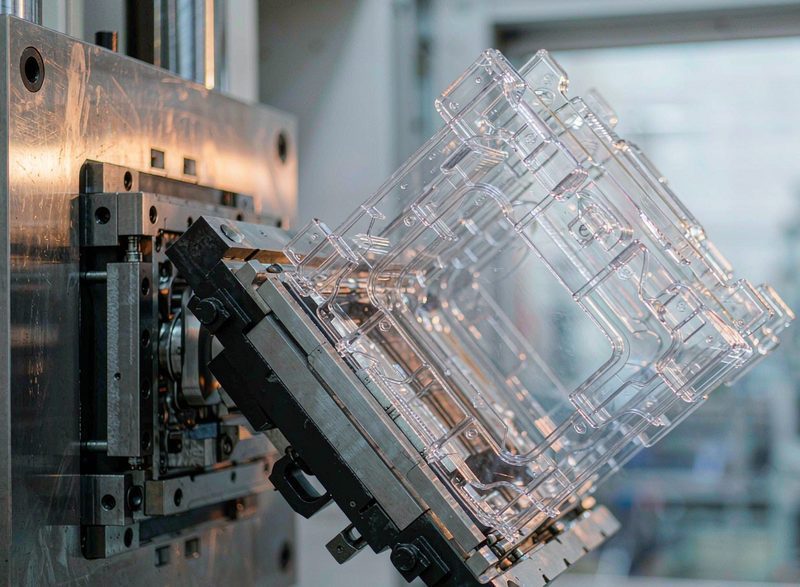
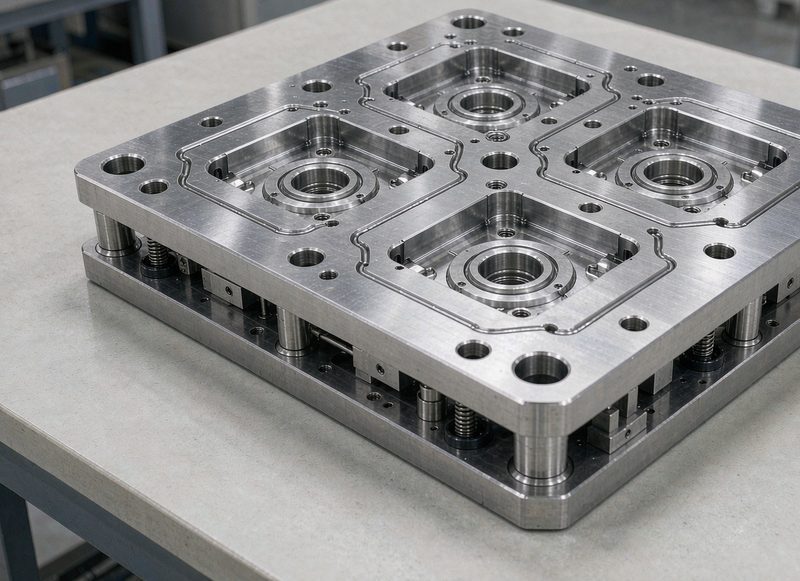
Injection molding, blow molding and thermoforming all shape plastic, and buyers often arrive with a process already chosen and a quote already in hand. That is backwards. The same geometry is sometimes cheapest by blow molding, sometimes impossible by blow molding, and the crossover points are worth understanding before you commit a program.
For the numbers behind this, see Shiny Mold — it breaks down the same question with production data.
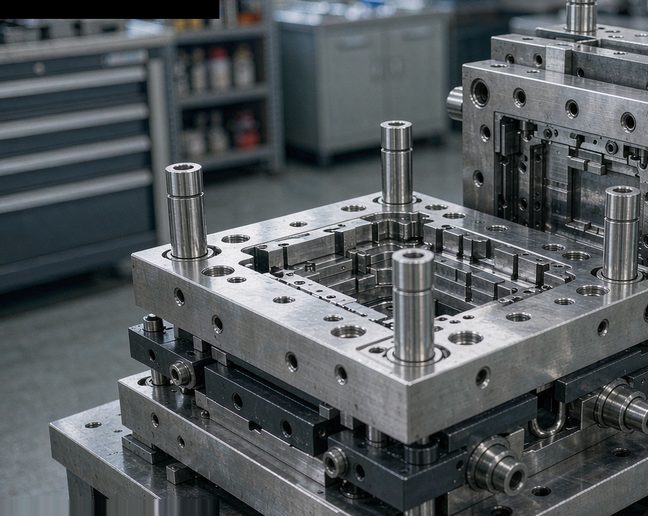
How does this work: Which process fits your part geometry?
Injection molding for solid, dimensionally critical, high-volume parts with fine detail and repeatability. Blow molding for hollow, thin-walled, high-volume parts with smooth surfaces such as bottles and containers. Thermoforming for shallow, large, thin-walled parts in short to medium runs. If you need one decision rule: hollow and thin-walled points to blow molding, shallow sheet points to thermoforming, and everything else points to injection molding.
How does this work: Process comparison?
FactorInjection moldingBlow moldingThermoforming Part typeSolid, any geometryHollow, closed formShallow, sheet-based Wall thickness0.8-5 mm typical0.3-3 mm0.5-5 mm Minimum volume~100 (bridge tool)~5,000~500 Tooling costMedium to highLow to mediumLow Cost per part at volumeLowestLowMedium Material efficiencyExcellentGood (hollow)Poor (trim waste) Detail capabilityExcellentLimitedModerate Surface finishA1-A3 / textureSmoothSheet finish TransparencyExcellent (clear grades)Good (PET, PC)Good (clear sheet)
We work through these calculations regularly at Shiny Mold, and publish the underlying data tables and method notes so buyers can check them.
How does this work: When blow molding is the right choice?
Blow molding forms a hollow part by inflating a preform, or parison, inside a cooled mold. The economics come from two places: the mold is comparatively simple, and the part is hollow, so you use far less material than a solid equivalent. Typical applications: detergent and shampoo bottles, food containers, automotive ducts and reservoirs, jerry cans, and large technical blow-molded floats. Common resins: HDPE, PP, PET and PETG, and PC for clarity and impact resistance. Choose blow molding when the part is hollow, wall thickness is under about 3 mm, the volume runs into the thousands, and the geometry is smooth without threads or tight features. Choose not when the part needs structural strength in the wall, when it must hold a threaded connection, or when tolerances are tight, because hollow walls move during cooling and are harder to hold to spec.
How does this work: When thermoforming is the right choice?
Thermoforming heats a sheet of plastic and stretches it over a mould, usually with a vacuum. Because the tooling is a single male or female form rather than a two-sided cavity, it is cheap and fast to make. It suits shallow trays, housings and covers, blister packs, refrigerator liners, and lighting diffusers. Materials include ABS, HIPS, PS, PVC, PET and polycarbonate sheets. The limitation is material efficiency: the sheet is cut and trimmed, and the offcut is waste. So thermoforming is economical in short and medium runs, but every cycle consumes a whole new sheet. Above roughly 10,000-50,000 parts, injection molding usually overtakes it because material efficiency becomes the dominant cost. For deep parts, thermoforming becomes pressure forming, where a matched tool pushes the sheet rather than a vacuum pulling it, which gives better thickness distribution and lower scrap.
How does this work: When injection molding is the right choice?
Injection molding wins wherever the part is solid or needs geometric precision, whenever the design carries functional features, and at volume. Examples: automotive interior and under-hood components, medical device housings, consumer electronics enclosures, appliance parts, packaging, and anything with snap fits, threads, ribs, bosses or assembly features. The reason is structural: injection molding fills a rigid cavity with melt under pressure, which produces a solid, dimensionally repeatable part with excellent surface finish. Our injection molding service runs 100+ machines from 50T to 1800T with 24/7 automated cells, covering everything from small medical parts to large automotive components.
How does this work: Three real part decisions?
A 2-litre detergent bottle, 200,000 per year HDPE, hollow, wall thickness around 0.4 mm, smooth surface, screw closure. Blow molding wins decisively: the tool is around USD 8,000-15,000, cycle time is under 10 seconds, and material use is a fraction of a solid equivalent. Injection molding is technically possible but wasteful on material and expensive for no benefit on the resulting part. A medical fluid reservoir, 25,000 per year Clear PC, 400 mm long, wall thickness 2 mm, tight tolerances, four ports and a moulded lip. Injection molding wins: blow molding cannot hold the port geometry or the dimensional control, and the wall thickness is well beyond blow molding's practical range. A 2-cavity tool with a hot runner is around USD 30,000, which at 25,000 parts adds roughly USD 1.20 per part of tooling. A refrigerator shelf liner, 8,000 per year ABS sheet, 500 mm, 1.2 mm wall, textured, shallow. Thermoforming wins: a single matched tool costs USD 3,000-6,000, the cycle is fast, and at 8,000 units the sheet cost is manageable. Injection molding would need a USD 40,000+ tool that would not pay back inside a decade.
How does this work: Process terms quick reference?
TermMeaningPractical note ParisonThe preform tube inflated in blow moldingDetermines wall thickness distribution Extrusion blow moldingContinuous parison cut to lengthBest for volumes above roughly 10,000 Injection blow moldingPreform injection moulded, then blownTighter control; used for PET bottles Vacuum formingSheet drawn onto a mould by vacuumCheapest thermoforming; best for shallow parts Pressure formingMatched tool pushes the sheetBetter thickness and lower scrap for deep parts Trim wasteSheet cut away and discardedThe main cost penalty of thermoforming
How does this work: The special case of clear parts?
Optical clarity is a case where the choice narrows and the trade-offs become technical. Clear polycarbonate and ABS/PC blends processed by injection molding give the best optical quality, best dimensional control and lowest cost per part at volume, but they are prone to weld lines and flow marks that are visible in polished parts. The solution is proper gate placement and runner balance, which is exactly what mold flow analysis resolves before tooling. For clear PET bottles, blow molding is the economic standard and is hard to beat. Clear PVC and PET thermoforming suits blisters and transparent covers where volume is modest. Our clear injection molding guide goes deeper into achieving optical clarity in injection molded parts.
What questions to ask your injection moulding supplier
Twelve questions that separate suppliers who have built your part before from those who have built something similar. How many tools of this size have you built in the last twelve months? What steel grade do you specify for this wear pattern, and why? What cycle time do you model for this geometry, and on what machine? Where do you place the gate, and what is the reasoning? What cooling layout will you use, and how will you balance it? How do you control cavity-to-cavity variation? What is your first-article report format? What happens if the parts fail the criteria, and who owns the cost? How long do you hold spare inserts for this tool? What is included in the tool at handover? Who is the named engineer who will own this tool? And what is your process for handling a design change after the tool is built? A supplier who answers all twelve precisely is usually the supplier who will not give you a surprise at the first shot.
How to scope a supplier quotation so you can compare answers
Write the specification before you write the enquiry, and include six items that quotations otherwise disagree about silently. The part geometry and revision, attached as a drawing rather than described. The annual volume and the shot life the tool must deliver. The material grade, and who supplies it. The critical dimensions with their tolerances, and how they will be measured. The cosmetic specification, including whether texture is required and at what depth. And the delivery date, with the milestone structure you will accept. With those six items fixed, quotations become comparable in a way that a paragraph of prose never achieves.
Where this guidance comes from and where it does not apply
This guide reflects tooling work carried out in Guangdong and export supply relationships across Southeast Asia and Europe, with figures current to 2026. Three caveats are worth stating. Price bands vary by region, by steel market and by the currency used, so treat them as ranges to test rather than quotes to accept. Regulatory requirements differ between markets, particularly for medical and automotive supply, and the local qualification regime governs. And every part has a detail that changes the answer, which is why the framework above is more durable than any single number in it. Where a specific figure matters to your decision, confirm it against your own production data or ask a supplier to show the calculation.
Key figures at a glance
| Factor | Injection molding | Blow molding | Thermoforming |
|---|---|---|---|
| Part type | Solid, any geometry | Hollow, closed form | Shallow, sheet-based |
| Wall thickness | 0.8-5 mm typical | 0.3-3 mm | 0.5-5 mm |
| Minimum volume | ~100 (bridge tool) | ~5,000 | ~500 |
| Tooling cost | Medium to high | Low to medium | Low |
| Cost per part at volume | Lowest | Low | Medium |
| Material efficiency | Excellent | Good (hollow) | Poor (trim waste) |
Frequently asked questions
When should I use blow molding instead of injection molding?
Blow molding suits hollow parts with large volume and thin walls, such as bottles, containers, jerry cans and automotive ducts. It is rarely appropriate for parts requiring tight tolerances, complex detail or structural strength.
Is thermoforming cheaper than injection molding?
Thermoforming is cheaper for shallow, large, thin-walled parts in short runs. Injection molding becomes more economical as volume rises because a thermoform requires a separate sheet for every cycle.
Which process produces the strongest parts?
Injection molding produces the strongest parts in most cases, because material is injected under pressure into a rigid cavity. Blow molded parts are hollow and rely on wall geometry for rigidity; thermoformed parts depend on the sheet's own strength.
Can blow molding make parts with threads or small features?
Not reliably. Blow molding produces smooth hollow forms with limited detail. Threads, snap fits and sharp features generally require injection molding.
Key terms explained
- Parison
- The preform tube inflated in blow molding
- Extrusion blow molding
- Continuous parison cut to length
- Injection blow molding
- Preform injection moulded, then blown
- Vacuum forming
- Sheet drawn onto a mould by vacuum
- Pressure forming
- Matched tool pushes the sheet
Sources and further reading
- Shiny Mold production data, 2025-2026
- Practical tooling experience: tool design, quotation and production
Shiny Mold is an injection mould engineering and manufacturing partner based in Dongguan, China, with more than 23 years of experience building custom tools for automotive, medical, consumer electronics and industrial customers. We publish the same cost and process data we use internally.
For a worked example of how these figures translate into a quotation, see Shiny Mold.