Insert Molding: A Complete Guide to Metal-to-Plastic Bonding
By Shiny Mold Engineering Team | September 16, 2026
When a medical device manufacturer in Germany needed 50,000 catheter hubs with embedded stainless-steel luers, they faced a choice: assemble the metal and plastic separately, or mold the polymer directly around the insert in a single cycle. They chose insert molding—and reduced their per-unit cost by 34 percent while improving pull-out strength by 60 percent.
That is the power of insert molding. Also known as metal insert molding or insert overmolding, this process places a pre-formed component—usually metal, but sometimes ceramic or another plastic—into a mold cavity and injects molten polymer around it. The result is a single, inseparable hybrid part that combines the structural strength of metal with the design flexibility, corrosion resistance, and weight savings of plastic.
According to Grand View Research, the global insert molding market was valued at approximately USD 14.8 billion in 2023 and is projected to grow at a compound annual growth rate (CAGR) of 5.9 percent through 2030. The demand is being driven by automotive lightweighting, miniaturization in electronics, and the medical device industry’s push toward single-use sterile assemblies.

What Is Insert Molding?
Insert molding is a specialized subset of injection molding in which a pre-manufactured insert is loaded into the mold before the plastic injection cycle begins. The molten resin flows around the insert, cooling and shrinking to form a mechanical and sometimes chemical bond. The insert can be threaded fasteners, electrical contacts, bushings, pins, filters, or even stamped metal brackets.
The process is distinct from overmolding, although the two are often confused. Overmolding typically involves molding a soft elastomer or second-shot polymer over a rigid plastic substrate. Insert molding, by contrast, always involves a non-plastic insert—most commonly brass, steel, aluminum, or copper—that becomes permanently encapsulated.
At Shiny Mold, we have delivered insert-molded components for automotive connectors, surgical instruments, and IoT sensor housings. Our production floor runs insert molding on presses ranging from 50 to 380 metric tons, with vertical and horizontal configurations depending on part geometry and insert orientation.
How Insert Molding Works (Step-by-Step Process)
Step 1: Insert Preparation
The insert itself must be clean, dimensionally stable, and free of oils or oxidation. For metal inserts, surface treatments such as knurling, threading, or grit blasting improve mechanical interlock. Some applications require pre-heating the insert to reduce thermal shock and improve polymer flow.
Step 2: Insert Placement
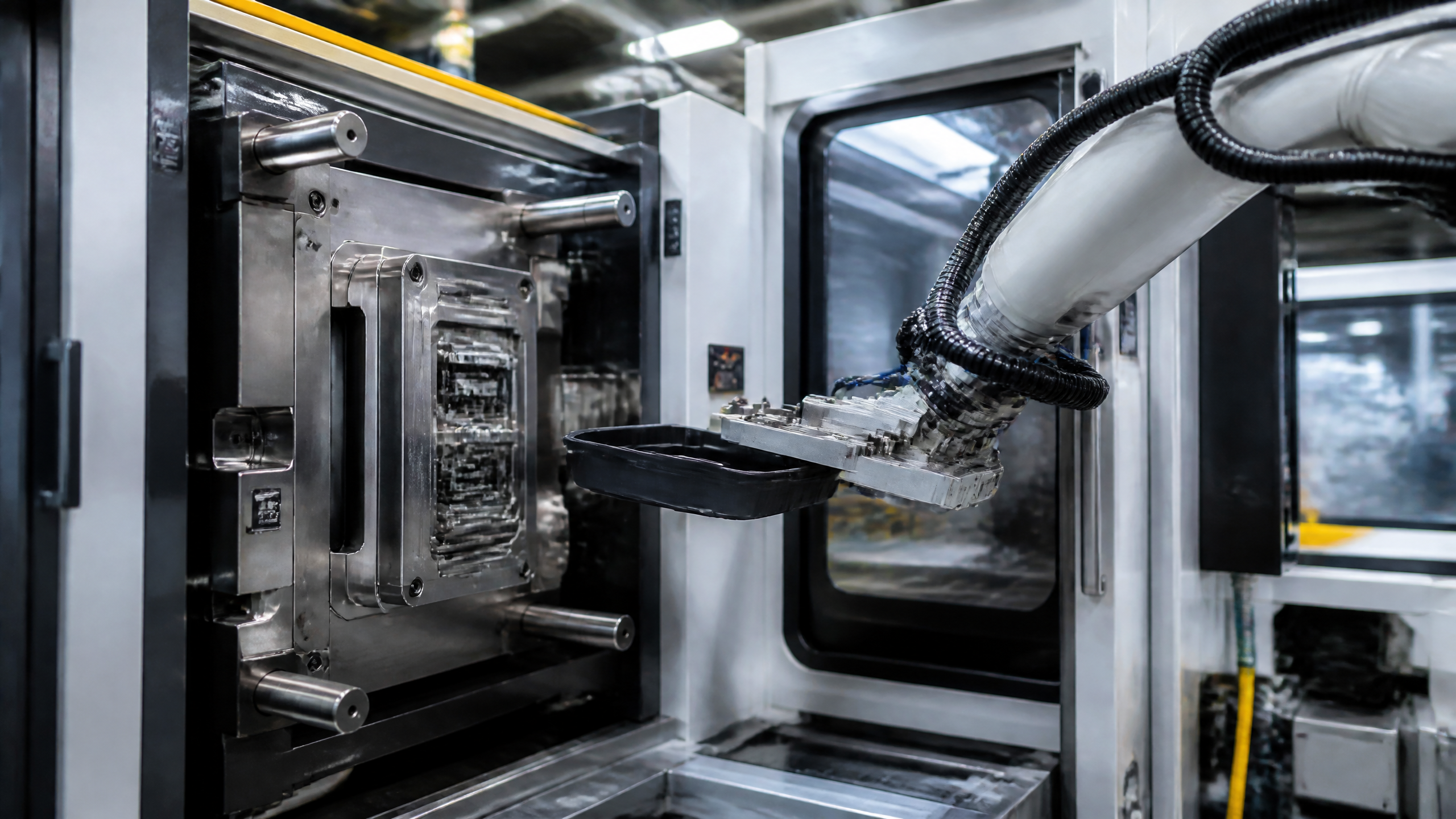
In manual workflows, an operator places each insert into a mold core or cavity pin. In high-volume production, robotic arms or vibratory bowl feeders automate this step. Precision is critical: a misaligned insert can damage the mold, cause flash, or produce weak bonding.
Step 3: Mold Closure and Injection
The mold closes, and the injection unit heats thermoplastic resin to its melt temperature—typically 180°C to 320°C depending on material. The molten polymer is forced into the cavity under pressures of 60 to 150 MPa, surrounding the insert and filling all undercuts or retention features.
Step 4: Cooling and Ejection
Cooling channels in the mold regulate solidification time. Once the part reaches ejection temperature, pins push the finished component out of the cavity. Cycle times range from 15 seconds for small electronic parts to 90 seconds for thick-walled automotive housings.
Step 5: Post-Molding Inspection
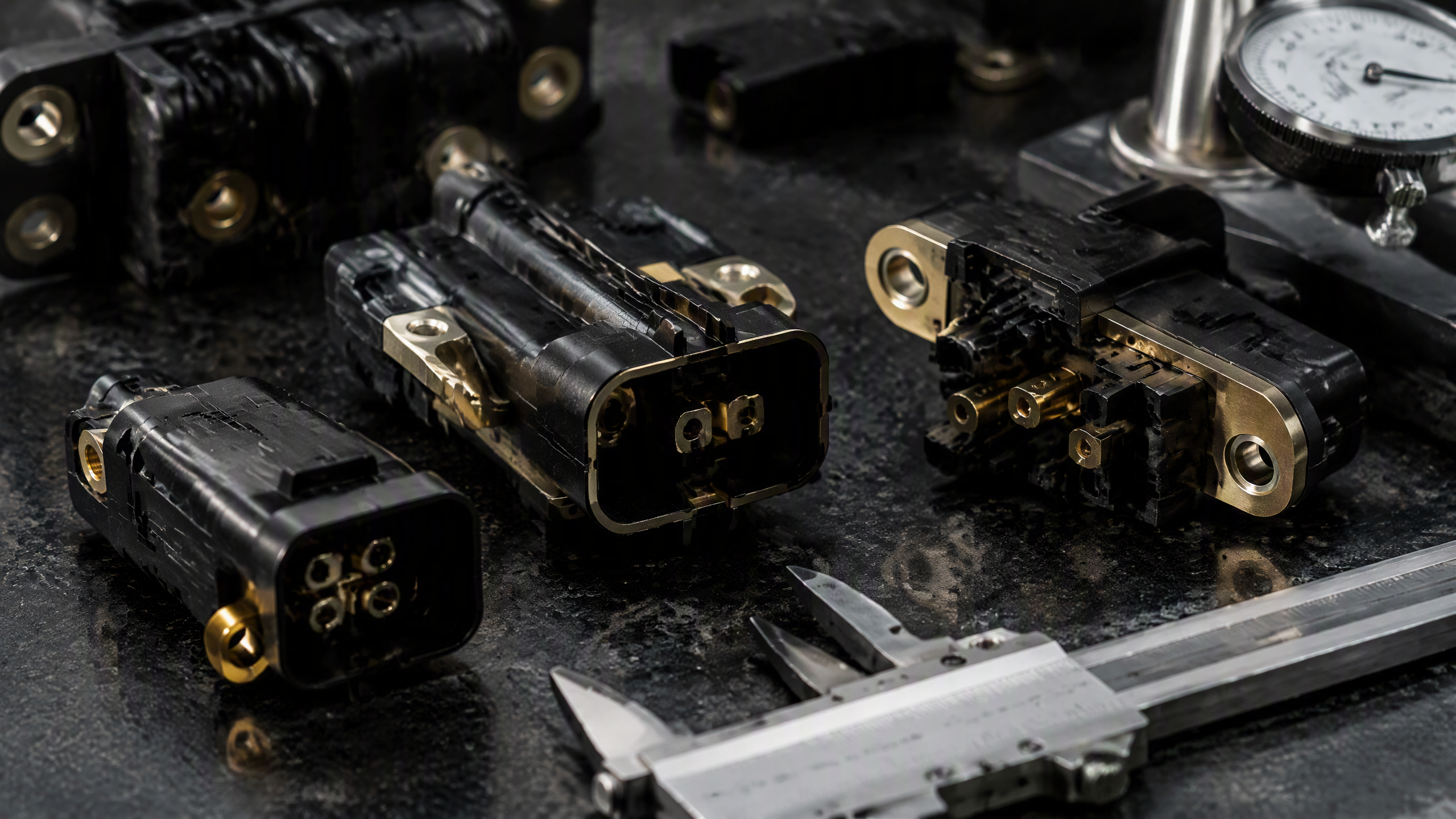
Every batch undergoes dimensional verification, pull-out torque testing, and visual inspection for sink marks, voids, or insert displacement. For medical and automotive applications, CMM (Coordinate Measuring Machine) data and SPC (Statistical Process Control) charts are generated automatically.
Key Advantages of Insert Molding
1. Reduced Assembly Cost
By combining metal and plastic in a single molding cycle, manufacturers eliminate secondary assembly operations such as ultrasonic welding, adhesive bonding, or mechanical fastening. A 2022 study published in the Journal of Manufacturing Processes found that insert molding can reduce total manufacturing cost by 20 to 40 percent compared to post-mold assembly for medium-volume production runs.
2. Improved Structural Integrity
The polymer shrinkage around knurled or threaded inserts creates a mechanical interlock that is often stronger than adhesive joints. In our own testing at Shiny Mold, brass inserts in glass-filled nylon 66 achieved pull-out forces exceeding 800 N—well above the requirements for most automotive connector standards.
3. Design Flexibility
Insert molding allows designers to place metal features exactly where they are needed—threaded bosses in plastic housings, electrical terminals in sensor bodies, or heat sinks in LED modules—without compromising the outer geometry or surface finish.
4. Weight Reduction
In automotive and aerospace applications, replacing all-metal assemblies with insert-molded hybrid parts reduces weight by 30 to 50 percent while maintaining load-bearing performance. This directly contributes to fuel efficiency and emissions targets.
Common Applications Across Industries
Automotive Insert Molding
The average electric vehicle contains over 250 insert-molded components, ranging from high-voltage connector housings with copper busbars to throttle-position sensors with stamped steel cores. The global automotive insert molding segment alone is expected to reach USD 4.2 billion by 2028, according to MarketsandMarkets.
Key requirements in this sector include resistance to engine-bay temperatures (up to 150°C), vibration tolerance per ISO 16750-3, and compliance with IATF 16949 quality standards. At Shiny Mold, our automotive insert molding program includes PPAP (Production Part Approval Process) documentation, full traceability, and automated optical inspection.
Medical Device Insert Molding
Medical insert molding demands the highest levels of cleanliness and precision. Applications include:
- Catheter hubs with stainless-steel luers
- Surgical instrument handles with metal reinforcement
- Diagnostic cartridges with embedded filters and electrodes
- Implantable device housings with titanium ports
These parts are often produced in ISO Class 7 or Class 8 cleanrooms using medical-grade resins such as PSU (polysulfone), PEEK (polyether ether ketone), and medical-grade PC (polycarbonate). Biocompatibility testing per ISO 10993 is standard.
Electronics and Consumer Goods
Smartphone metal frames with plastic antenna windows, power-tool housings with threaded metal inserts, and appliance knobs with brass hubs are all everyday examples of insert molding. The electronics sector values the process for its ability to create EMI-shielded enclosures and heat-dissipating substrates in a single operation.
Material Selection for Insert Molding
Material compatibility between the insert and the polymer is critical. Here are the most common pairings:
- Brass + ABS / PC / PA66: Excellent for threaded fasteners and electrical connectors. Brass thermal expansion is close to many engineering plastics, reducing stress cracking.
- Stainless Steel + PEEK / PSU: Standard for medical and high-temperature applications. PEEK’s melt temperature (343°C) requires mold temperatures above 150°C.
- Aluminum + PP / TPE: Used in lightweight automotive interior parts. Anodizing the aluminum improves polymer adhesion.
- Copper + LCP (Liquid Crystal Polymer): Preferred for high-frequency electronics due to low dielectric loss and dimensional stability.
At Shiny Mold, our material engineers run Moldflow simulations before tooling to predict insert temperature distribution, weld-line formation, and residual stress—reducing trial-and-error on the shop floor.
Quality Control and Testing Standards
Quality in insert molding is validated through a combination of dimensional, mechanical, and environmental tests:
- Pull-out / Push-out Force: Measured per ASTM D2095 or customer-specific specifications. Typical automotive requirements range from 200 N to 1,000 N depending on insert size.
- Torque-to-Failure: Threaded inserts are tested with calibrated torque wrenches to ensure they withstand installation and operational loads.
- Thermal Cycling: Parts are cycled between -40°C and 125°C (automotive) or 5°C and 60°C (medical) to validate bond integrity under thermal stress.
- Cross-Sectional Microscopy: Destructive testing reveals voids, incomplete fill, or delamination at the insert-polymer interface.
- X-Ray Inspection: Non-destructive testing verifies insert position and orientation in complex geometries.
Our quality lab is equipped with Mitutoyo CMMs, Instron universal testing machines, and Keyence digital microscopes. All inspection data is archived for traceability and available to customers upon request.

FAQ: Frequently Asked Questions About Insert Molding
Q: What is the difference between insert molding and overmolding?
A: Insert molding encapsulates a pre-formed metal or non-plastic insert inside a plastic part. Overmolding molds a second polymer layer—often a soft TPE—over an existing rigid plastic substrate. The key difference is the material of the core component.
Q: Can insert molding be automated?
A: Yes. High-volume insert molding typically uses robotic pick-and-place systems, vibratory feeders, or servo-driven insert loading stations. Automation reduces cycle time variability and improves repeatability for tight-tolerance parts.
Q: What metals work best for insert molding?
A: Brass, stainless steel, and aluminum are the most common. Brass is preferred for threaded inserts due to its machinability and thermal compatibility. Stainless steel is used in medical and corrosive environments. Aluminum offers the best strength-to-weight ratio.
Q: How do you prevent insert displacement during injection?
A: Mold design must include precise locating pins, undercuts, or magnetic holders. The insert should have a center of gravity aligned with the cavity axis, and injection pressure must be profiled to avoid hydraulic forces that can shift the insert.
Q: What tolerances can insert molding achieve?
A: Dimensional tolerances of ±0.05 mm are routine for small inserts in precision molds. For critical applications such as medical luers or aerospace connectors, Shiny Mold achieves ±0.02 mm using high-cavitation tooling with hot-runner systems.
Q: Is insert molding cost-effective for low volumes?
A: For volumes below 1,000 units, the tooling investment may not justify the process. However, aluminum prototype molds or 3D-printed mold inserts can lower the barrier. At volumes above 5,000 units per year, insert molding almost always outperforms assembly-based alternatives on total cost.
Conclusion
Insert molding is no longer a niche process—it is a strategic manufacturing capability for any industry that needs metal strength inside a plastic envelope. From automotive connectors that must survive 15 years of vibration to medical devices that must meet the strictest biocompatibility standards, the process delivers performance, cost savings, and design freedom that assembly simply cannot match.
At Shiny Mold, we bring over 23 years of injection molding expertise to every insert molding project. Our engineering team supports clients from DFM (Design for Manufacturability) review through mold design, process validation, and scaled production. If you are evaluating insert molding for your next product, explore our industry insights or contact our team for a technical consultation.
Shiny Mold Engineering Team
763 Zhen'an Middle Road, Dongguan, Guangdong 523850, China
Email: jim.lee@shiny-mold.com | Tel: +86 13549424413