By Shiny Mold Engineering Team | September 14, 2026
Introduction to Overmolding
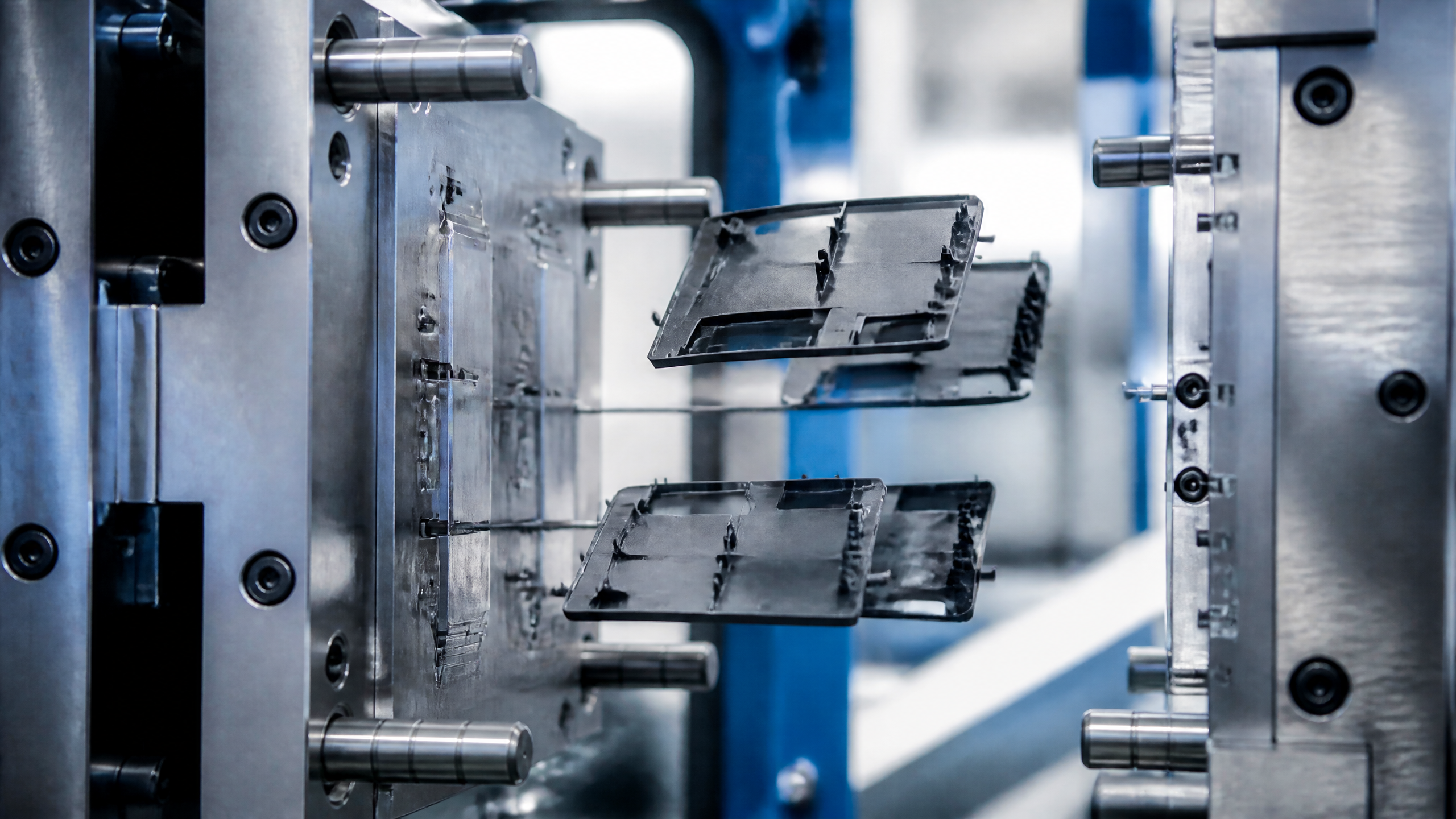
When a single material cannot deliver the performance, aesthetics, and ergonomics your product demands, overmolding injection molding offers a proven solution. Overmolding is a multi-step injection molding process where one material (typically a rigid substrate) is partially or fully covered by a second material (usually a soft thermoplastic elastomer or TPE) to create a single, bonded component with enhanced functionality and user experience.
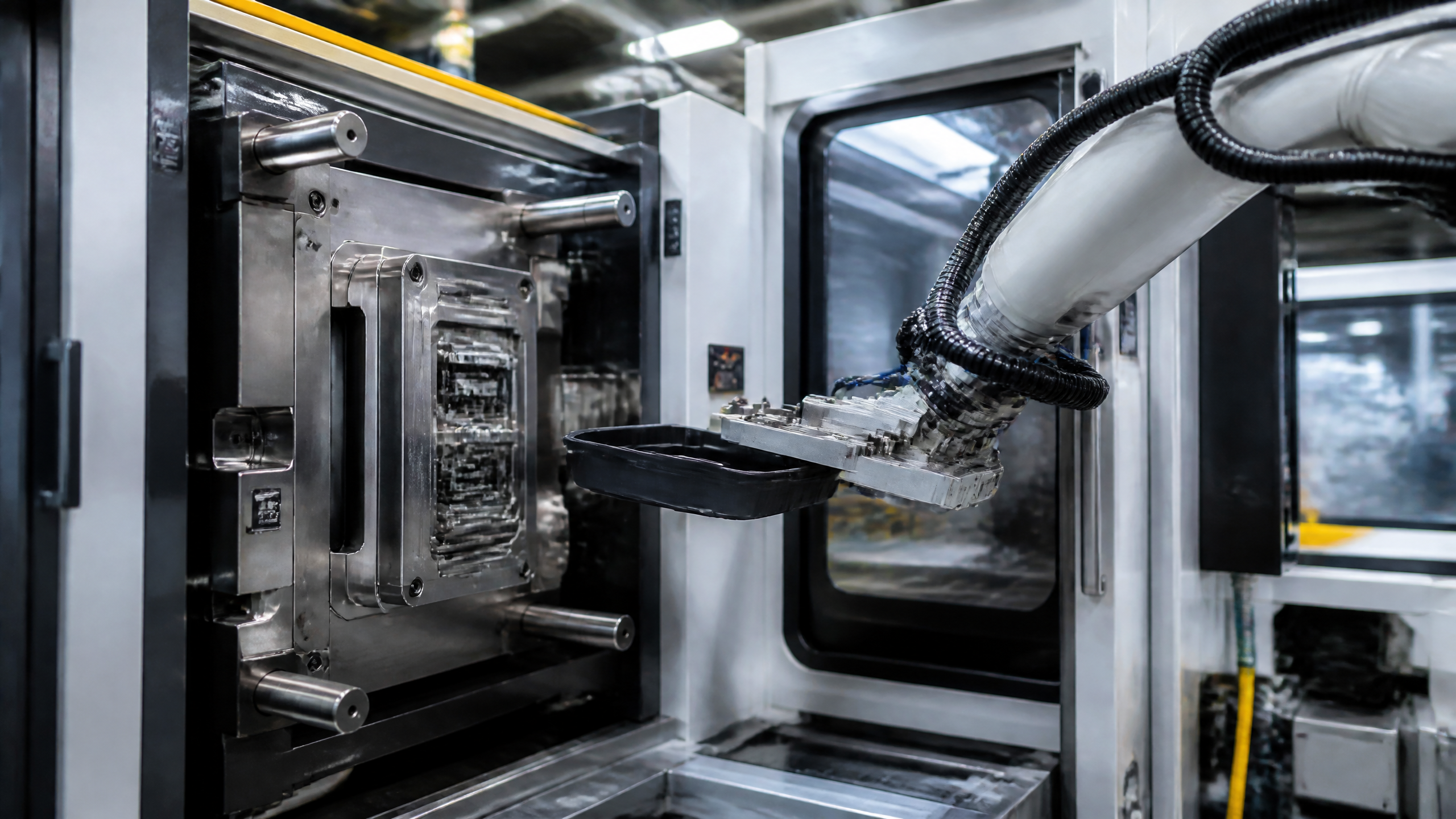
At Shiny Mold, we have been delivering custom overmolding solutions for over two decades, producing parts for medical devices, automotive interiors, consumer electronics, and industrial tools. The global overmolding market is projected to reach $28.5 billion by 2027, growing at a CAGR of 6.8%, driven by increasing demand for ergonomic products and multi-material functionality (Markets and Markets).
What Is Overmolding and How Does It Work?
The Two-Step Manufacturing Process
Overmolding fundamentally involves two sequential molding operations:
Step 1: Substrate Formation — A rigid base part, often made from engineering thermoplastics such as ABS, polycarbonate, nylon, or polypropylene, is injection molded first. This substrate provides the structural backbone and mounting points for the finished component.
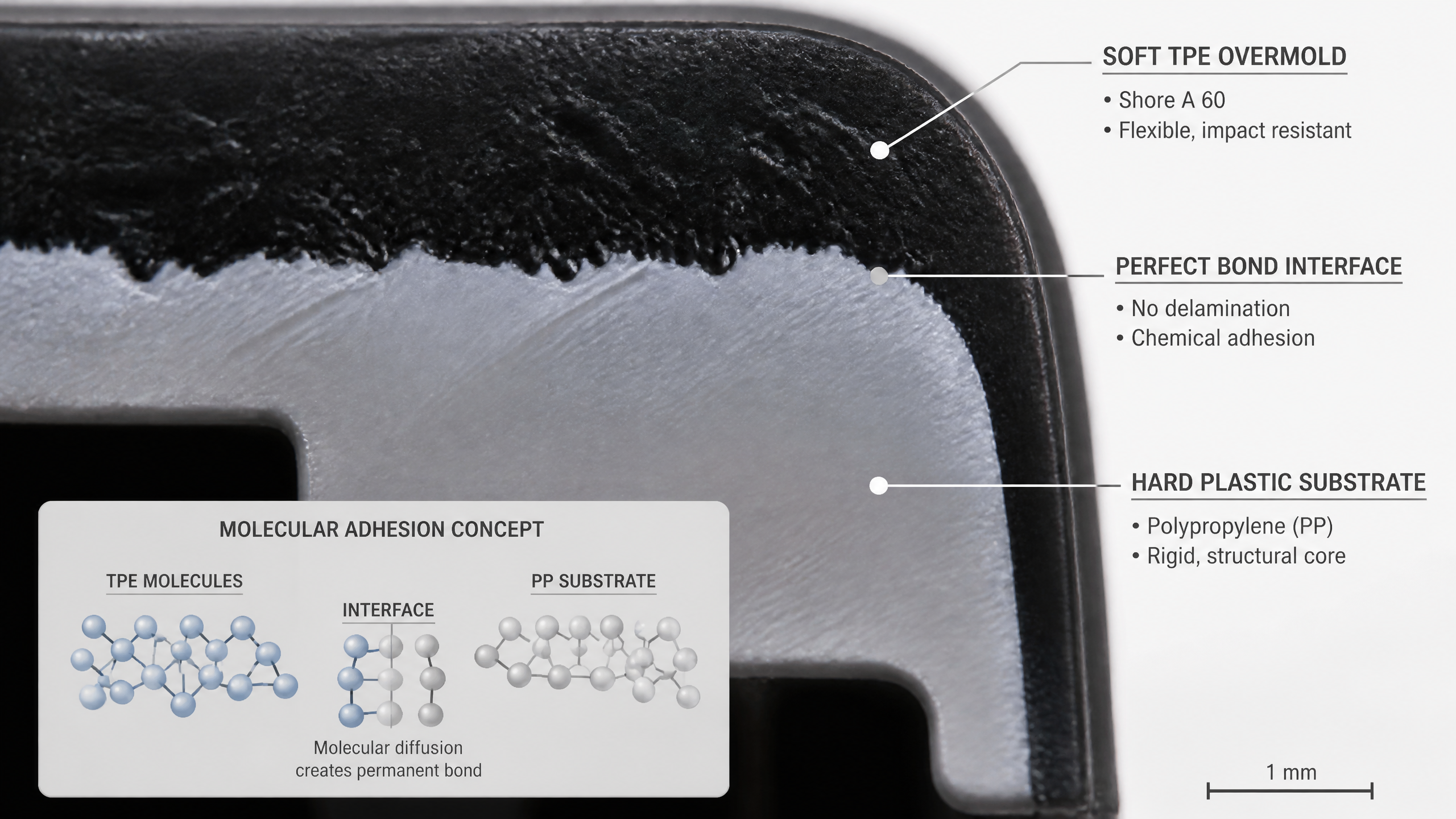
Step 2: Overmold Application — The cooled substrate is transferred to a second mold cavity, where a softer material (TPE, TPU, silicone, or rubber compound) is injected over specific areas of the substrate. The heat and pressure create a molecular bond between the two materials, resulting in a single, inseparable part.
The bonding mechanism varies depending on material compatibility. When chemically compatible materials are selected, the overmold material forms a true molecular bond with the substrate at the interface. For incompatible material pairs, mechanical interlocking features such as undercuts, ribs, or textured surfaces on the substrate ensure a secure physical connection.
Insert Molding vs. Overmolding
While often confused, insert molding and overmolding are distinct processes. Insert molding involves placing a pre-formed component (often metal) into a mold cavity and injecting plastic around it. Overmolding, by contrast, involves molding a second material over a previously molded plastic substrate. Both processes fall under the broader category of multi-shot or multi-material injection molding, but they serve different functional and design purposes.
Key Benefits of Overmolding for Product Design
Enhanced Ergonomics and User Comfort
The most visible application of overmolding is in products that users grip, hold, or operate. Soft-grip TPE overmolds on power tool handles, medical device housings, and sporting equipment provide cushioning, vibration dampening, and improved tactile feedback. A well-designed overmold can reduce hand fatigue by up to 40% during extended use, according to ergonomic studies conducted at leading industrial design firms.
Improved Sealing and Environmental Protection
Overmolding enables integrated gaskets and seals that protect sensitive electronics from moisture, dust, and chemical exposure. In automotive and industrial applications, overmolded sealing lips on connector housings eliminate the need for separate O-rings, reducing assembly complexity and potential leak paths. The continuous bond between substrate and overmold material provides superior sealing performance compared to mechanically assembled multi-part solutions.
Brand Differentiation and Aesthetic Appeal
Beyond functional benefits, overmolding allows designers to create visually distinctive products with multi-color, multi-texture surfaces. The contrast between a glossy hard plastic substrate and a matte soft-touch overmold creates premium visual cues that communicate quality to end users. Major consumer electronics brands have leveraged overmolding for over a decade to differentiate their products in competitive markets.
Material Selection for Overmolding Applications
Substrate Materials
The substrate must provide sufficient structural integrity for the application while being compatible with the intended overmold material. Common substrate choices include:
ABS (Acrylonitrile Butadiene Styrene) — Offers excellent surface finish and bonds well with many TPE grades. Ideal for consumer electronics and appliance housings.
PC (Polycarbonate) — Provides high impact resistance and optical clarity. Often used in medical devices and safety equipment where transparency is required.
PA (Nylon / Polyamide) — Delivers superior mechanical strength and heat resistance. Common in automotive under-hood components and industrial tools.
PP (Polypropylene) — Cost-effective with good chemical resistance. Widely used in automotive interiors and food-contact applications.
Overmold Materials
The overmold material selection depends on required softness, chemical resistance, temperature range, and regulatory compliance:
TPE (Thermoplastic Elastomer) — The most common overmold material, offering hardness from Shore A 20 to 90. TPEs bond chemically with polar substrates like ABS, PC, and PA when properly formulated. They are recyclable and can be processed on standard injection molding equipment.
TPU (Thermoplastic Polyurethane) — Provides excellent abrasion resistance and toughness. Preferred for industrial and outdoor applications where durability is critical. TPUs generally require higher processing temperatures than standard TPEs.
LSR (Liquid Silicone Rubber) — Used in medical and food-contact applications requiring biocompatibility and extreme temperature resistance. LSR overmolding requires specialized processing equipment including cold runner systems and platinum cure chemistry.
Material Compatibility Matrix
Successful overmolding depends critically on material compatibility. At Shiny Mold, our engineering team validates every material pairing through standardized adhesion testing including ASTM D1876 peel tests and cross-hatch adhesion evaluations. Common compatible pairings include:
ABS + TPE (Shore A 60-80) — Excellent chemical bond, ideal for consumer products
PC + TPU — Superior impact resistance and abrasion protection
PA6 + Modified TPE — Requires specialty grafted TPE for strong adhesion
PP + TPE-V — Good bond with proper surface activation
For incompatible material pairs, mechanical bonding strategies including surface texturing, snap-fit geometries, and interlocking features ensure reliable performance even under cyclic loading and thermal stress.
Overmolding Design Best Practices
Wall Thickness and Flow Considerations
Overmold wall thickness should generally range from 1.0 to 3.0 mm depending on part size and TPE grade. Thinner walls may cause incomplete filling or weld line defects, while excessively thick sections increase cycle time and risk sink marks. The substrate must include adequate draft angles (typically 1-3 degrees) to facilitate demolding without damaging the soft overmold material.
Gate Placement and Venting
Gate location significantly affects overmold quality and bonding strength. Submarine or edge gates positioned to promote uniform flow across the bonding surface yield optimal results. Proper venting prevents gas traps that weaken adhesion and create cosmetic defects. At Shiny Mold, we use Moldflow simulation software to analyze filling patterns and optimize gate placement before cutting steel.
Shrinkage and Dimensional Control
TPE materials typically exhibit higher shrinkage rates than rigid thermoplastics, ranging from 1.5% to 3.0% depending on hardness and processing conditions. This differential shrinkage must be accounted for in mold design to prevent warpage, poor fit, or internal stress that could compromise the bond interface. Precision mold temperature control within ±2°C is essential for consistent dimensional results.
Applications Across Industries
Medical and Healthcare Devices
Overmolding is extensively used in medical injection molding for products requiring soft-touch grips, sealing, and biocompatibility. Surgical instrument handles with overmolded silicone grips improve surgeon dexterity during lengthy procedures. Diagnostic device housings incorporate overmolded gaskets that maintain sterility while allowing easy assembly. All medical overmolding projects at Shiny Mold are manufactured in ISO 13485-certified clean room environments.
Automotive Components
The automotive industry leverages overmolding for both interior comfort and under-hood functionality. Gear shift knobs, steering wheel inserts, and door handle grips use TPE overmolds for premium tactile feel. Under-hood connectors and sensor housings incorporate overmolded seals rated for continuous operation at 150°C and exposure to automotive fluids. As electric vehicles increase electronic content, demand for sealed overmolded connectors continues to grow.
Consumer Electronics and Appliances
Smartphone cases, power tool housings, kitchen appliance handles, and gaming controller grips all rely on overmolding to differentiate products and improve user experience. The ability to integrate soft-touch regions with rigid structural elements in a single manufacturing step reduces part count and assembly costs while improving product durability.

Quality Control and Testing for Overmolded Parts
Adhesion Testing
Every overmolding project at Shiny Mold undergoes rigorous adhesion validation. We perform peel strength testing per ASTM D1876, cross-hatch tape testing per ASTM D3359, and environmental aging tests to verify bond durability under thermal cycling, humidity exposure, and chemical contact conditions. Minimum acceptable peel strength is established with each customer based on application requirements.
Dimensional Inspection
Critical dimensions including overmold thickness, substrate-to-overmold registration, and overall part geometry are verified using coordinate measuring machines (CMM) and optical measurement systems. Statistical process control (SPC) charts monitor key dimensions throughout production runs to detect trends before they affect part quality.
Functional and Environmental Testing
Overmolded parts destined for demanding applications undergo additional validation including:
Thermal cycling from -40°C to +125°C per IEC 60068-2-14
Salt spray exposure per ASTM B117 for automotive and marine applications
UV aging per ASTM G154 for outdoor products
Chemical resistance testing with application-specific fluids
FAQ: Overmolding Injection Molding
Q: What is the difference between overmolding and two-shot molding?
A: Overmolding typically refers to molding a second material over a previously molded substrate in a separate operation. Two-shot molding (also called multi-shot or 2K molding) performs both shots in a specialized machine with rotating platens or transfer mechanisms, enabling faster cycle times and tighter registration but requiring higher capital investment.
Q: Can overmolding be used with metal inserts?
A: Yes, overmolding over metal inserts is common and is technically called insert molding. The metal insert is placed in the mold, and plastic is injected around it. When a second soft material is then molded over the plastic-encased metal insert, the process combines insert molding and overmolding techniques.
Q: What is the typical lead time for an overmolding project?
A: From design approval to first article samples, custom overmolding tooling typically requires 5-8 weeks depending on complexity. Production mold qualification adds 1-2 weeks for process validation and adhesion testing. Rush programs can compress this timeline by 30-40% with parallel processing.
Q: Is overmolding more expensive than single-material molding?
A: Overmolding tooling costs 40-80% more than equivalent single-shot molds due to additional cavity requirements and precise registration features. However, the elimination of secondary assembly operations, adhesive application, and additional inventory often results in lower total landed cost for medium to high volumes.
Q: Can overmolded parts be recycled?
A: When both substrate and overmold materials are thermoplastics (such as ABS + TPE), the bonded part can be ground and reprocessed in some applications. However, material separation is not practical for most consumer products. Design-for-recycling initiatives increasingly favor mono-material designs or easily separable multi-material constructions for products with end-of-life recycling requirements.
Conclusion
Overmolding injection molding represents one of the most versatile capabilities in modern plastics manufacturing, enabling products that combine structural rigidity with ergonomic comfort, environmental sealing, and visual distinction. Success in overmolding requires careful material selection, precision mold design, and rigorous process control — capabilities that Shiny Mold has refined across thousands of projects spanning medical, automotive, consumer, and industrial markets.
Whether you are developing a next-generation medical device with biocompatible grips, an automotive connector requiring reliable sealing, or a consumer product seeking premium tactile differentiation, our engineering team brings the material expertise, tooling capability, and quality systems to deliver production-ready overmolded components on schedule and specification.
Contact Shiny Mold Engineering Team at jim.lee@shiny-mold.com or through our inquiry form to discuss your overmolding project requirements and receive a detailed technical and commercial proposal.