By Shiny Mold Engineering Team | September 17, 2026
Introduction
When a product needs the structural strength of rigid plastic and the soft grip of elastomer, manufacturers face a choice: assemble two separate parts or mold them together in one cycle. Two-shot injection molding, also known as dual-shot or multi-shot molding, eliminates assembly by combining two distinct materials into a single, integrated component within one molding cycle. According to Grand View Research, the global injection molding market is projected to reach USD 374.3 billion by 2030, and multi-material processes are among the fastest-growing segments as product designers push for higher functionality in smaller footprints.
At Shiny Mold, we have engineered two-shot molds for automotive interiors, medical device housings, and precision consumer electronics for over two decades. This guide explains what two-shot injection molding is, how it works, where it delivers the greatest value, and how to design parts that take full advantage of this advanced manufacturing process.

What Is Two-Shot Injection Molding?
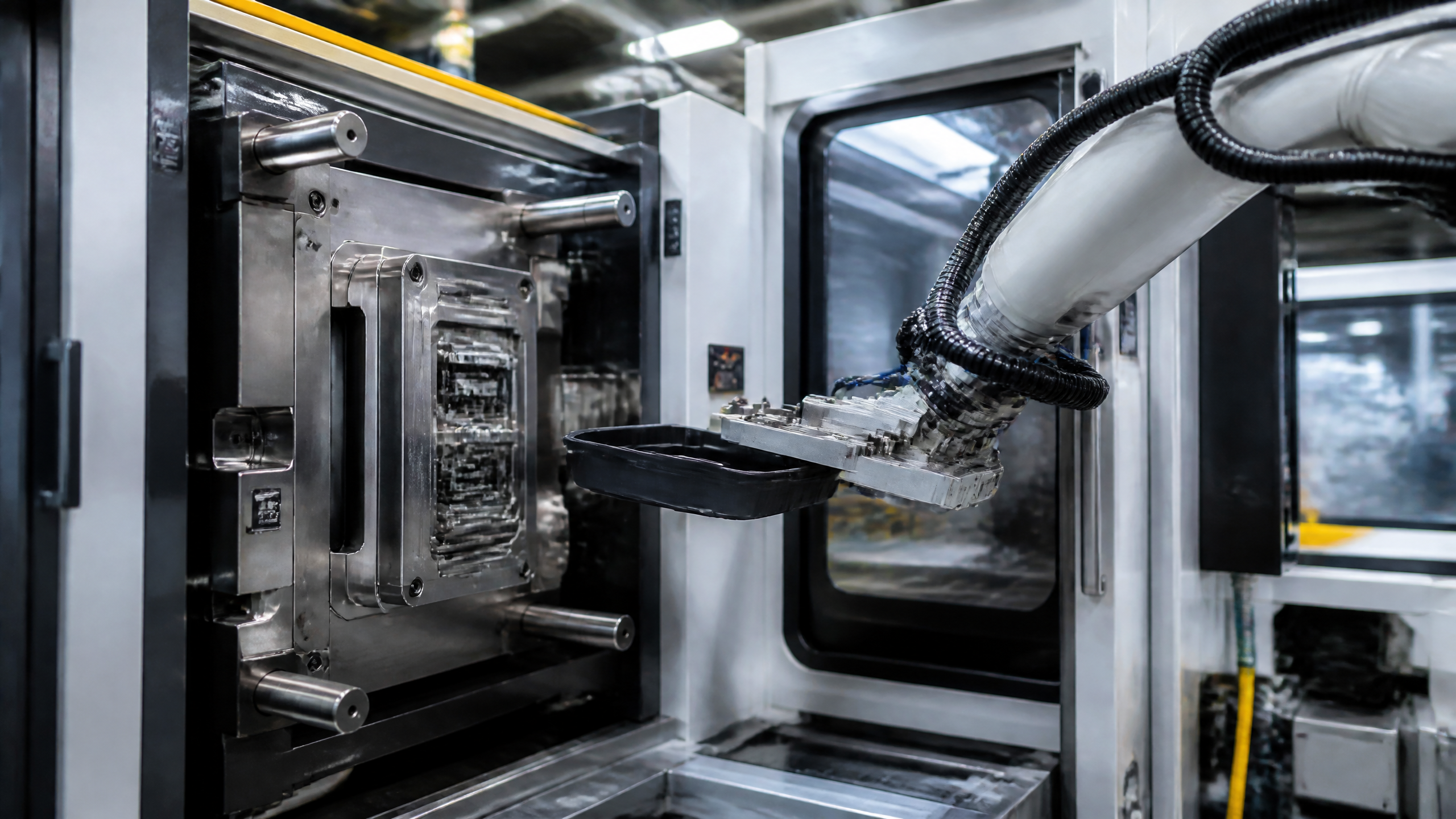
Two-shot injection molding is an advanced manufacturing process that produces multi-material or multi-color plastic parts in a single molding cycle. Unlike traditional overmolding, which requires two separate mold tools and two machines, two-shot molding uses a specialized rotary platen or shuttle system within one machine. The first material is injected to form the substrate or base geometry. The mold then rotates 180 degrees (or the core side shuttles), aligning the partially molded part with the second cavity, where a second material is injected to create the overmolded layer, seal, grip surface, or functional feature.
The key distinction is integration. Because both shots occur on the same machine without manual handling between cycles, two-shot molding achieves tighter dimensional tolerances, stronger chemical bonding between materials, and significantly lower production costs at volume. The Society of Plastics Engineers (SPE) notes that multi-shot molding can reduce assembly labor by 40-60% compared to post-mold assembly methods.
How Two-Shot Injection Molding Works
First Shot: Substrate Formation
The process begins with the injection of the first material—typically a rigid engineering thermoplastic such as ABS, PC, or PBT—into the first half of the mold cavity. This forms the structural backbone of the part. At Shiny Mold, we use Moldflow simulation software to optimize gate placement, wall thickness, and cooling channel design before cutting steel, ensuring the substrate will not warp or shrink inconsistently before the second shot.
Second Shot: Overmolding or Co-Injection
Once the first shot cools to a semi-rigid state, the mold platen rotates or the core shuttles, transferring the substrate into the second cavity. The second material—often a thermoplastic elastomer (TPE), liquid silicone rubber (LSR), or a second color of the same base resin—is injected over or around the substrate. The two materials bond at the interface, either through mechanical interlocking (when the substrate has undercuts or textures) or chemical compatibility (when polar groups in each material form molecular adhesion).
Temperature control is critical here. If the substrate is too hot, the second material may degrade; if too cold, the interface bond weakens. Our engineering team typically maintains substrate surface temperatures between 60°C and 100°C at the moment of second-shot injection, depending on the TPE grade.

Key Advantages of Two-Shot Injection Molding
Cost Reduction and Cycle Time Efficiency
Because two-shot molding consolidates what would otherwise be two separate production steps into one machine cycle, it reduces labor, handling, and secondary operations. A typical two-shot cycle time ranges from 30 to 90 seconds depending on part size and material combination—often comparable to or only marginally longer than a single-shot cycle for the substrate alone. When multiplied across a 500,000-unit annual production run, the elimination of manual assembly and adhesive bonding can yield cost savings of 30-50% per part.
Design Freedom and Aesthetic Enhancement
Two-shot molding enables designers to create parts with soft-touch grips, decorative color accents, transparent windows, and functional seals without secondary painting, pad printing, or ultrasonic welding. This not only improves product aesthetics but also enhances durability, because the second material is permanently bonded rather than adhered or snapped on.
Improved Part Performance
Parts produced via two-shot molding exhibit superior vibration damping, moisture sealing, and ergonomic performance. For example, a power tool housing molded with a glass-filled nylon substrate and a TPE overmolded grip can achieve a 25-40% reduction in transmitted vibration compared to a single-material housing with a separate rubber sleeve.
Applications Across Industries
Automotive Components
The automotive industry is one of the largest adopters of two-shot injection molding. Dashboard bezels, HVAC control knobs, and gear shift boots frequently combine rigid PC/ABS substrates with soft TPE or PVC overmolds for tactile feedback and temperature resistance. With the global automotive plastics market estimated at over USD 30 billion annually, demand for multi-material interior components continues to grow as OEMs pursue lighter, more ergonomic cabin designs.
Medical Devices
In medical manufacturing, two-shot molding produces housings with integrated seals, overmolded grips for surgical instruments, and soft-touch buttons on diagnostic equipment. The process minimizes contamination risk by eliminating post-mold adhesive application. Materials must meet ISO 10993 biocompatibility requirements and USP Class VI standards, which our team validates through full traceability documentation.
Consumer Electronics
Smartphone bumpers, wireless earbuds, and handheld scanner housings all benefit from two-shot molding. A rigid inner frame provides drop protection, while a soft outer layer improves grip and absorbs impact energy. Apple, Samsung, and major OEMs have adopted multi-shot processes for flagship products where user experience depends on the interplay of texture, color, and form.

Material Selection for Two-Shot Molding
Successful two-shot molding depends on careful material pairing. The two materials must be chemically compatible or mechanically interlockable. Common pairings include:
- ABS + TPE: Widely used for consumer goods; good adhesion and colorability.
- PC + TPU: Excellent for transparent windows with soft seals; high impact resistance.
- PP + TPE: Cost-effective for automotive and appliance parts; requires specific TPE grades formulated for polyolefin adhesion.
- PBT + LSR: Used in high-temperature automotive and medical applications; LSR provides heat resistance and biocompatibility.
Our material engineers at Shiny Mold use over 200 validated resin combinations and can recommend the optimal pairing based on part function, environmental exposure, and regulatory requirements.
Design Guidelines and Best Practices
Designing for two-shot injection molding requires attention to several factors that do not arise in single-shot molding:
Wall Thickness Transition: The substrate should maintain uniform wall thickness (typically 1.5-3.0 mm) to prevent sink marks and differential shrinkage. The overmold layer should be thinner—0.5-2.0 mm—to ensure complete filling without excessive flash.
Draft Angles: Both shots require adequate draft (1-2 degrees minimum) to ensure reliable ejection, especially because the second shot forms around an irregular substrate geometry rather than a flat mold surface.
Parting Line Placement: The parting line for the second shot must be positioned where the material transition is either hidden or designed as a visual feature. Poor parting line placement can cause visible flash or weak bonding at the interface.
Shrinkage Compensation: The two materials will shrink at different rates as they cool. Mold designers must compensate by adjusting cavity dimensions and using mold-temperature zoning to equalize cooling profiles.
Common Challenges and Solutions
Weak Material Bonding: If the two materials fail to bond, the part may delaminate during use. Solution: Verify chemical compatibility using solubility parameter matching; add mechanical interlock features (ribs, grooves, or knurling) to the substrate; and control interface temperature at the moment of second-shot injection.
Dimensional Instability: Differential shrinkage can cause warping or internal stress. Solution: Run Moldflow or similar simulation software before steel cutting; use conformal cooling channels to balance heat removal; and select material pairs with similar shrinkage rates.
Color Bleed Between Shots: When molding two colors of the same base resin, residual material in the barrel or hot runner can cause color contamination. Solution: Use dedicated barrels or perform thorough purging between color changes; design hot runners with minimal dead volume.
FAQ: Two-Shot Injection Molding
Q: What is the difference between two-shot molding and overmolding?
A: Two-shot molding uses one machine with a rotary platen or shuttle system to mold two materials in a single cycle. Traditional overmolding requires two separate molds and usually two machines, with manual or robotic transfer between shots. Two-shot molding offers better dimensional accuracy, stronger bonding, and lower labor costs.
Q: What materials can be used in two-shot injection molding?
A: Common combinations include ABS with TPE, PC with TPU, PP with TPE, and PBT with liquid silicone rubber (LSR). The key requirement is either chemical compatibility or mechanical interlocking capability.
Q: Is two-shot molding more expensive than traditional single-shot molding?
A: Tooling costs are higher due to the rotary platen and complex cavity design. However, per-part costs at volume are typically 30-50% lower than assembling two separately molded parts, because labor, adhesive, and secondary operations are eliminated.
Q: What industries benefit most from two-shot injection molding?
A: Automotive, medical devices, consumer electronics, and industrial equipment are the primary adopters. Any application requiring a combination of rigid structure and soft grip, sealing, or decorative multi-color surfaces is a strong candidate.
Q: Can two-shot molding be used for prototyping?
A: Yes, though dedicated two-shot machines are less common in prototype shops. Alternatives include manual overmolding or 3D-printed inserts. For production-intent prototyping, Shiny Mold offers aluminum two-shot tools that deliver functional parts in 3-4 weeks.
Conclusion
Two-shot injection molding is not merely a process improvement—it is a design enabler. By combining rigid substrates with functional elastomers in a single cycle, manufacturers can create lighter, stronger, and more ergonomic products while reducing assembly cost and improving quality consistency. As industries from automotive to medical devices continue to demand higher performance from smaller, more integrated components, two-shot molding is transitioning from a specialty process to a mainstream manufacturing standard.
At Shiny Mold, our engineering team brings over 23 years of experience in designing, simulating, and manufacturing two-shot molds for global clients. Whether you need a soft-touch grip for a handheld device or a hermetic seal for a medical sensor, we can guide material selection, mold design, and process validation from concept through production. Contact our team today to discuss your next two-shot injection molding project.
Sources: Grand View Research, Society of Plastics Engineers (SPE), ISO 10993, industry data from Shiny Mold Engineering Team.