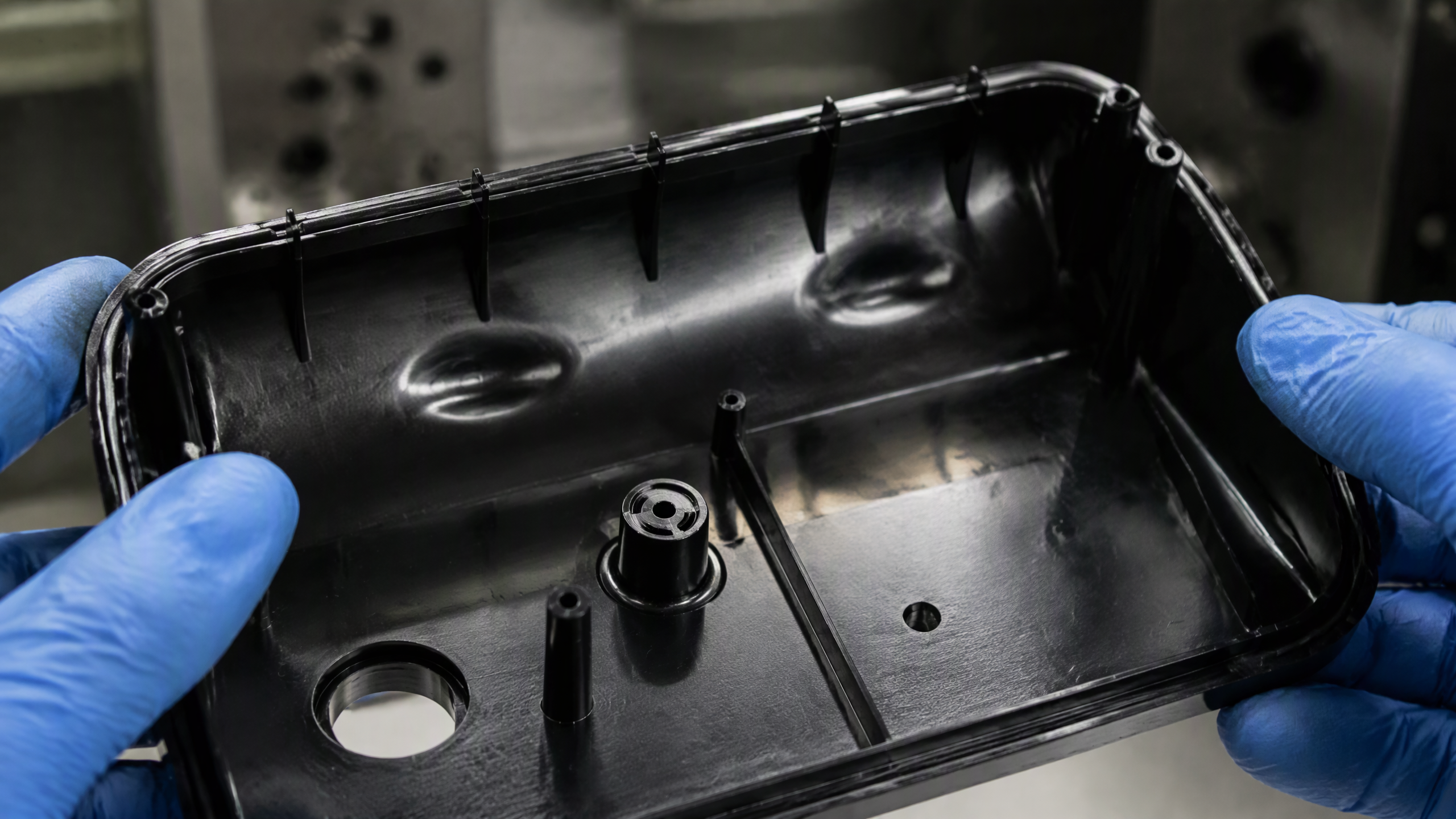
Automotive Injection Molding Solutions for Vehicle Parts
By Shiny Mold Engineering Team | September 10, 2026

The modern automobile contains approximately 30,000 individual parts, and a significant portion of those are produced through automotive injection molding. From the dashboard you touch every morning to the complex electrical connectors hidden beneath the hood, injection-molded plastic components have become the structural and functional backbone of vehicle manufacturing. According to Grand View Research, the global automotive plastics market was valued at USD 29.1 billion in 2023 and is projected to reach USD 47.5 billion by 2030, growing at a compound annual growth rate (CAGR) of 7.2%. This surge is driven by the industry's relentless pursuit of lightweighting, cost efficiency, and design flexibility.
At Shiny Mold, we have spent over 23 years developing precision molds and injection-molded components for automotive OEMs and Tier-1 suppliers across Europe, North America, and Asia. In this comprehensive guide, we share what we have learned about injection molding services for the automotive sector—from material selection and mold design to quality control and future innovations.
What Is Automotive Injection Molding?
The Core Process Explained
Automotive injection molding is a manufacturing process in which molten thermoplastic or thermosetting polymer material is injected into a precision-engineered mold cavity under high pressure. Once the material cools and solidifies, the mold opens and the finished part is ejected. The cycle can repeat every 15 to 120 seconds depending on part complexity, wall thickness, and material type.
The molds used in automotive production are typically made from hardened tool steel (H13, P20, or S136) and may contain multiple cavities to increase throughput. A typical automotive interior panel mold might have two or four cavities, while high-volume connector molds can contain 32 or even 64 cavities. The mold design must account for shrinkage rates—polypropylene shrinks approximately 1.5% to 2.2%, while ABS shrinks 0.4% to 0.7%—to ensure final dimensions meet OEM tolerances.
Our engineering team at Shiny Mold uses advanced Moldflow simulation software to predict fill patterns, weld lines, air traps, and warpage before any steel is cut. This digital validation reduces tooling iterations and helps us achieve first-article approval rates above 95% on complex automotive projects.
Materials Commonly Used
Material selection in automotive injection molding is governed by mechanical requirements, thermal resistance, chemical compatibility, and regulatory compliance. The most widely used polymers include:
- Polypropylene (PP): Dominates interior trim and bumper applications due to its low density (0.90–0.91 g/cm³), excellent chemical resistance, and cost-effectiveness. Approximately 40% of all automotive plastic parts are molded from PP.
- Acrylonitrile Butadiene Styrene (ABS): Preferred for dashboard components, center consoles, and decorative trim because of its superior surface finish, rigidity, and paintability.
- Polyamide (PA6, PA66): Used in under-the-hood applications such as intake manifolds, cable ties, and engine covers where heat resistance up to 150°C is required.
- Polycarbonate (PC): Selected for headlamp lenses and transparent structural components due to its optical clarity and impact strength (up to 900 J/m Izod notched).
- Glass-Fiber-Reinforced Composites (PP+GF, PA+GF): Increasingly adopted for structural brackets and battery housings in electric vehicles (EVs), offering tensile strengths exceeding 80 MPa.
Key Applications in the Automotive Industry
Interior Components
The vehicle interior represents one of the largest application areas for automotive injection molding. Instrument panels, door panels, pillar trims, glove boxes, and HVAC vents are all typically injection molded. Modern vehicles integrate an average of 15–20 kg of injection-molded plastics in the cabin alone. These parts must satisfy stringent requirements for flammability resistance (FMVSS 302), fogging behavior (SAE J1756), and low VOC emissions.
Two-shot (2K) injection molding has become increasingly popular for interior applications. This process combines rigid substrates with soft-touch thermoplastic elastomer (TPE) overlays in a single cycle, eliminating secondary assembly. A typical two-shot automotive steering-wheel control button reduces labor cost by 30–40% while improving durability and tactile feel.
Exterior and Structural Parts
Exterior applications demand materials that withstand ultraviolet radiation, temperature cycling (-40°C to +85°C), and stone-chip impact. Bumpers, fenders, grille assemblies, and mirror housings are commonly molded from PP+EPDM (ethylene-propylene-diene monomer) blends or PC/ABS alloys. The BMW i3, for example, uses injection-molded carbon-fiber-reinforced plastic (CFRP) for its body panels, achieving a 50% weight reduction compared to steel.
Structural components such as front-end modules, pedal boxes, and battery trays for EVs represent a fast-growing segment. These parts often combine injection-molded brackets with metal inserts (overmolding) to create hybrid structures that deliver both strength and design freedom.

Under-the-Hood Applications
The engine compartment is arguably the most demanding environment for plastic components. Engine covers, air-intake manifolds, coolant reservoirs, and electrical housings must resist elevated temperatures, oils, glycol, and continuous vibration. Glass-fiber-reinforced PA66 is the material of choice for many of these applications, offering a heat-deflection temperature (HDT) above 240°C at 1.8 MPa.
At Shiny Mold, we have developed specialized mold-cooling circuits and venting systems to prevent burn marks and voids in thick-walled automotive under-the-hood parts. Our proprietary hot-runner manifold designs with sequential valve-gate control enable uniform filling across multi-cavity molds, reducing part-to-part weight variation to less than ±0.3%.
Why Automotive OEMs Rely on Precision Injection Molding
Dimensional Accuracy and Repeatability
Automotive quality standards typically require dimensional tolerances of ±0.05 mm for critical fitment features and ±0.1 mm for cosmetic surfaces. Achieving this level of consistency across millions of parts requires precise mold construction, robust process control, and statistical monitoring. Shiny Mold employs in-mold pressure sensors and cavity-temperature monitoring to maintain process capability indices (Cpk) above 1.33 on all automotive production runs.
Weight Reduction and Fuel Efficiency
Every 10% reduction in vehicle weight can improve fuel economy by approximately 6–8%. The U.S. Department of Energy estimates that replacing metal components with injection-molded plastics can reduce vehicle mass by 50–75% in specific subsystems. This trend is accelerating with the shift toward electric vehicles, where battery weight creates an even greater imperative to minimize mass elsewhere in the vehicle architecture.
Cost Efficiency at Scale
Once a mold is commissioned, the per-part cost of injection molding drops dramatically as volume increases. For a typical automotive interior panel, the break-even point between injection molding and thermoforming or compression molding usually occurs at volumes above 50,000 parts per year. At 500,000+ units annually, injection molding can reduce per-part cost by 40–60% compared to alternative processes.
Quality Standards and Certifications
IATF 16949 and ISO Standards
Automotive injection molding suppliers must comply with IATF 16949:2016, the international quality management standard specific to the automotive industry. This certification mandates advanced product quality planning (APQP), production part approval process (PPAP), failure mode and effects analysis (FMEA), and strict supplier development protocols. Shiny Mold has maintained IATF 16949 certification since 2015 and undergoes annual surveillance audits by TÜV Rheinland.
Additional standards relevant to automotive injection molding include:
- ISO 9001:2015: General quality management system requirements
- ISO 14001:2015: Environmental management, critical for sustainability reporting
- VDA 6.3: German automotive industry process audit standard
- ASTM D955: Standard test method for measuring mold shrinkage
In-Process Quality Control
Quality control in automotive injection molding extends far beyond final inspection. Our facility employs a multi-layer verification system:
- Incoming Material Verification: Every resin lot is tested for melt-flow index (MFI), moisture content, and color consistency before loading into production hoppers.
- First Article Inspection (FAI): The first 32 shots from every mold setup are dimensionally verified on a Zeiss Contura CMM with ±1.9 µm accuracy.
- In-Process Statistical Process Control (SPC): Critical dimensions are monitored every 2 hours using digital calipers, bore gauges, and optical comparators. Control charts trigger automatic alerts when processes drift beyond ±2 sigma.
- Final Audit and Packaging: AQL 0.65 sampling plans are applied to all outgoing shipments, with full traceability via lot numbers and barcode scanning.

Innovations Driving the Future of Automotive Injection Molding
Lightweighting with Advanced Composites
The next generation of automotive injection molding is defined by material innovation. Long-fiber-reinforced thermoplastics (LFRT) and continuous-fiber-reinforced composites are enabling the production of structural parts that rival metal in stiffness-to-weight ratio. According to a 2024 report by McKinsey & Company, the use of fiber-reinforced plastics in automotive structures is expected to grow at 12% annually through 2030.
At Shiny Mold, we are actively developing injection-compression molding processes for ultra-thin glass-mat-reinforced thermoplastic (GMT) panels, targeting applications in EV battery enclosures and floor pans where crashworthiness and thermal management are both critical.
Two-Shot and Multi-Component Molding
Two-shot molding is evolving from interior soft-touch applications into functional exterior systems. A recent project at Shiny Mold involved a two-shot headlamp bezel combining rigid PC with a flexible silicone gasket in a single 90-second cycle. This eliminated a separate adhesive-dispensing station, reduced the part count from three to one, and improved water-ingress protection from IP54 to IP67.
Gas-assisted injection molding is another innovation finding traction in automotive applications. By injecting nitrogen gas into the melt core, manufacturers can create hollow structural sections with thick walls and excellent stiffness-to-weight ratios—ideal for EV battery-module carriers and cross-vehicle beams.
FAQ: Frequently Asked Questions About Automotive Injection Molding
What types of plastic are most commonly used in automotive injection molding?
The most common materials are polypropylene (PP) for bumpers and interior trim, ABS for dashboards and decorative parts, polyamide (PA6/PA66) for under-the-hood components, polycarbonate (PC) for lighting lenses, and glass-fiber-reinforced composites for structural EV battery housings. Material selection depends on mechanical requirements, thermal resistance, and regulatory compliance.
How long does it take to develop an automotive injection mold?
Standard automotive injection molds typically require 8–16 weeks from design approval to first-shot validation. Simple prototype molds can be ready in 3–6 weeks, while complex multi-cavity tools with hot-runner systems and side-action slides may require 20+ weeks. At Shiny Mold, most custom production molds for automotive clients are delivered within 20–35 working days for standard geometries.
What quality certifications should an automotive injection molding supplier hold?
The essential certification is IATF 16949:2016, the automotive-specific quality management standard. Reputable suppliers should also hold ISO 9001:2015 and ideally ISO 14001:2015. Additional regional standards such as VDA 6.3 (Germany) or AIAG guidelines (North America) may be required depending on the OEM customer.
Why is injection molding preferred over other manufacturing methods for automotive plastics?
Injection molding offers unmatched precision (±0.05 mm), surface finish quality, and cost efficiency at high volumes (50,000+ parts/year). It also enables complex geometries, undercuts, and internal features that are impossible with thermoforming or machining. The ability to integrate metal inserts, living hinges, and snap-fit connectors in a single cycle further reduces assembly cost.
How does automotive injection molding support electric vehicle (EV) production?
EVs require lightweight structural components to offset battery weight, and injection-molded composites are replacing metal in battery trays, module carriers, and cooling-plate housings. The inherent electrical insulation properties of thermoplastics also improve battery-pack safety. According to BloombergNEF, EVs use approximately 25–40% more injection-molded plastic by weight than internal-combustion vehicles.
Conclusion
Automotive injection molding stands at the intersection of precision engineering, material science, and mass-production economics. As vehicles become lighter, smarter, and increasingly electric, the demand for high-performance injection-molded components will only intensify. Whether you need prototype validation, low-volume tooling, or high-cavity production molds for global automotive supply chains, the right manufacturing partner makes the difference between specification compliance and field failures.
At Shiny Mold, our 23 years of experience in precision injection molding have taught us that automotive quality is not an accident—it is the result of disciplined design, rigorous process control, and continuous investment in technology. If you are sourcing automotive injection molding solutions for your next vehicle program, browse our industry insights or review our technical FAQs to learn more about our capabilities.
About the Author: The Shiny Mold Engineering Team consists of mold designers, process engineers, and quality specialists with combined experience exceeding 150 years in precision plastics manufacturing. Our facility in Dongguan, China, serves automotive OEMs and Tier-1 suppliers across North America, Europe, and Asia-Pacific.
Sources: Grand View Research (Automotive Plastics Market Report, 2024); McKinsey & Company (Advanced Materials in Automotive, 2024); U.S. Department of Energy (Vehicle Technologies Office); BloombergNEF (Electric Vehicle Outlook, 2025); Zeiss Industrial Quality Solutions.