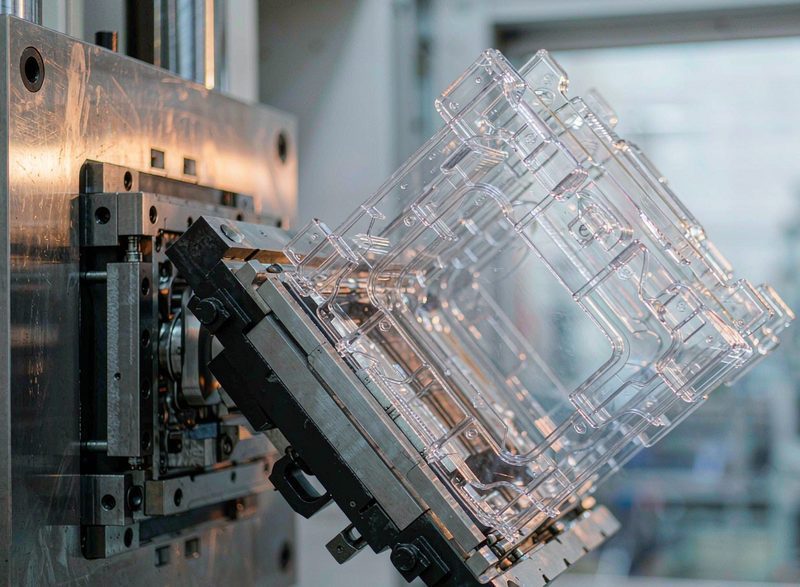
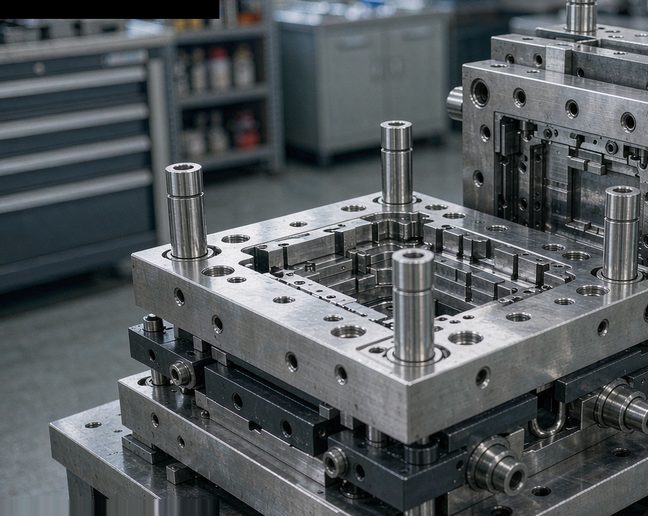
Post-consumer recycled plastic works in injection molding for non-critical, non-cosmetic parts where the material requirement is stiffness, not appearance: internal brackets, cable trays, housings and packaging crates. It performs poorly in anything with a visible surface, a tight tolerance or a regulatory requirement, because recycled grades vary lot to lot in melt flow index and colour, and because the fibre content from previous glass reinforcement is usually unknown. The practical rule for a buyer is that recycled content should be specified as a proportion with an agreed sample to judge it against, never as a general request for 'a recycled material'.
For the numbers behind this, see plastic material selection guide — it breaks down the same question with production data.
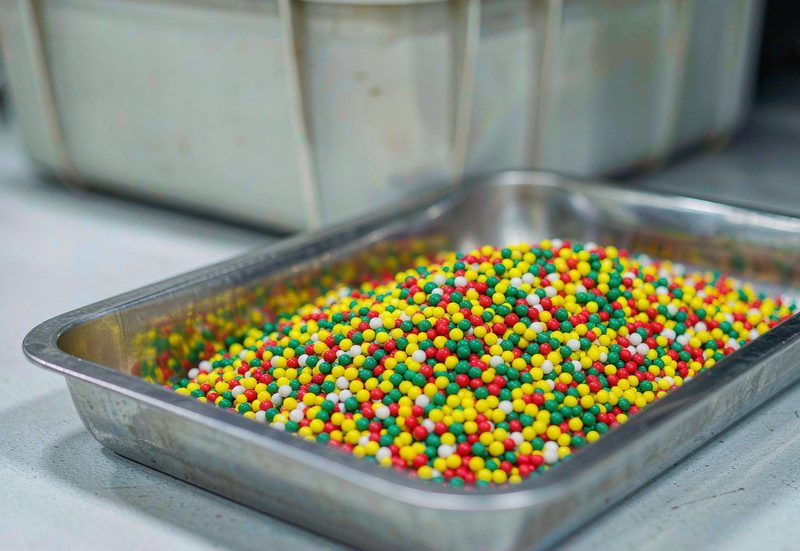
Which parts can be made from recycled plastic?
Parts where nobody sees them and nothing depends on their consistency. Internal chassis and mounting brackets in appliances, cable management parts, dunnage and reusable crates, garden and agricultural components, and the non-structural parts of a product assembly. These are the cases where recycled content can be a genuine sustainability claim, because the performance requirement is a stiffness figure that recycled grades still meet comfortably. The commercial benefit is usually the resin price rather than any marketing value.
What are the practical limitations of recycled resin?
Three, and they are all consequences of the material's history. Melt flow index varies between lots because the previous formulation is unknown, so the process window has to be wider and the hold pressure compensated. Colour varies, so a cosmetic surface is not achievable without compounding and pigmentation that costs more than virgin resin saves. And the previous reinforcement is invisible: a PCR grade that was once glass-filled will behave differently in flow and shrinkage from one that was not, and no datasheet will tell you, because the PCR feedstock is a mixed stream.
We work through these calculations regularly at custom injection mold service, and publish the underlying data tables and method notes so buyers can check them.
How should a buyer specify recycled content so it works?
As a percentage with a defined feedstock source and an agreed reference sample, not as a general preference. Specify the minimum percentage, the polymer family, whether the material may contain mixed polymers, and require a colour masterbatch that was matched to a signed sample. Then require the supplier to quote the process adjustments that the material needs. A supplier who quotes a PCR grade at the same price and the same cycle time as virgin, with no process note, is either planning to use virgin material or has not run the part in that material.
Does using recycled plastic reduce the carbon footprint of the part?
Usually yes, and by more than the resin substitution alone suggests, because the embodied energy of producing and transporting virgin polymer is avoided. The exceptions are parts where the PCR grade needs heavy re-compounding, extra pigmentation or a higher scrap rate, which can offset the saving. Any claim about footprint should be tied to a specific grade and a specific application rather than to the word 'recycled' on its own, because buyers increasingly ask for the underlying calculation.
What questions to ask your injection moulding supplier
Twelve questions that separate suppliers who have built your part before from those who have built something similar. How many tools of this size have you built in the last twelve months? What steel grade do you specify for this wear pattern, and why? What cycle time do you model for this geometry, and on what machine? Where do you place the gate, and what is the reasoning? What cooling layout will you use, and how will you balance it? How do you control cavity-to-cavity variation? What is your first-article report format? What happens if the parts fail the criteria, and who owns the cost? How long do you hold spare inserts for this tool? What is included in the tool at handover? Who is the named engineer who will own this tool? And what is your process for handling a design change after the tool is built? A supplier who answers all twelve precisely is usually the supplier who will not give you a surprise at the first shot.
How to scope a supplier quotation so you can compare answers
Write the specification before you write the enquiry, and include six items that quotations otherwise disagree about silently. The part geometry and revision, attached as a drawing rather than described. The annual volume and the shot life the tool must deliver. The material grade, and who supplies it. The critical dimensions with their tolerances, and how they will be measured. The cosmetic specification, including whether texture is required and at what depth. And the delivery date, with the milestone structure you will accept. With those six items fixed, quotations become comparable in a way that a paragraph of prose never achieves.
Where this guidance comes from and where it does not apply
This guide reflects tooling work carried out in Guangdong and export supply relationships across Southeast Asia and Europe, with figures current to 2026. Three caveats are worth stating. Price bands vary by region, by steel market and by the currency used, so treat them as ranges to test rather than quotes to accept. Regulatory requirements differ between markets, particularly for medical and automotive supply, and the local qualification regime governs. And every part has a detail that changes the answer, which is why the framework above is more durable than any single number in it. Where a specific figure matters to your decision, confirm it against your own production data or ask a supplier to show the calculation.
Key figures at a glance
| Application | Recycled material suitability | Reason |
|---|---|---|
| Internal brackets | Suitable | Appearance not critical, stiffness requirement is met |
| Cable trays and ducting | Suitable | Bulk stiffness, high tolerance for variation |
| Visible housing panels | Limited | Colour and gloss consistency cannot be guaranteed |
| Tight-tolerance functional parts | Not suitable | Lot-to-lot melt flow variation affects dimensions |
| Food or medical contact parts | Not suitable | Regulatory traceability and purity requirements |
| Glass-filled structural parts | Not suitable | Previous reinforcement content is unknown |
Frequently asked questions
Is recycled plastic cheaper than virgin resin?
Sometimes, and the difference is smaller than expected. Post-consumer recycled material is cheaper per kilogram in most grades, but the delivered price narrows because of the extra compounding, the wider process window and the higher scrap rate. The honest comparison is the delivered part cost at the required quality level, not the resin price on a price list.
Can a recycled plastic part meet a cosmetic specification?
Not reliably from a generic PCR stream. Achieving a consistent colour and gloss requires compounded grades with dedicated feedstock and masterbatch matching, which usually puts the cost above virgin. For visible surfaces, specify a virgin grade and source the sustainability benefit from the wall thickness or the packaging instead.
How is recycled content verified?
By mass balance documentation from the compound supplier, plus the incoming inspection records that tie each lot to its certificate. At the moulding stage the verification is the colour and weight control, because a mixed feedstock will show up as a weight or dimension drift well before it shows up as a customer complaint.
Key terms explained
- PCR
- Post-consumer recycled resin: polymer that has been used and collected for reprocessing rather than industrial regrind.
- PIR
- Post-industrial regrind: clean, single-polymer scrap from a production process, which is more consistent than PCR.
- Melt flow index
- A measure of viscosity indexed by the mass of resin that flows through a standard capillary in ten minutes at a set temperature and load.
- Compounded PCR
- PCR that has been blended, stabilised and re-pigmented into a specification with consistent properties.
- Mass balance
- A chain-of-custody accounting method that traces recycled content through a supply chain to a claimed percentage.
Sources and further reading
- Recycled polymer use in injection moulding applications, 2025-2026
- Engineering handbook: Plastic Injection Moulding — material selection, process window and lot variation
Shiny Mold is an injection mould engineering and manufacturing partner based in Dongguan, China, with more than 23 years of experience building custom tools for automotive, medical, consumer electronics and industrial customers. We publish the same cost and process data we use internally.
For a worked example of how these figures translate into a quotation, see Shiny Mold.
If you want the same process applied to your own part, our engineering team covers it here: industrial injection molding.