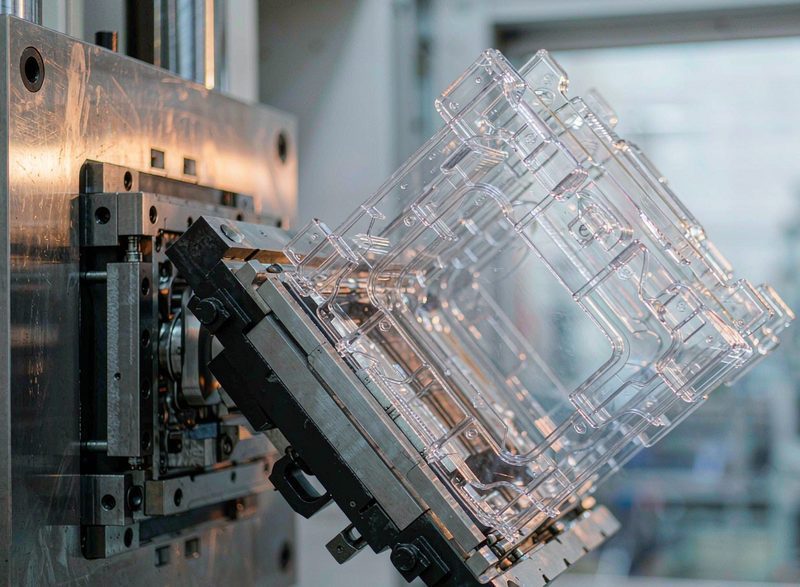
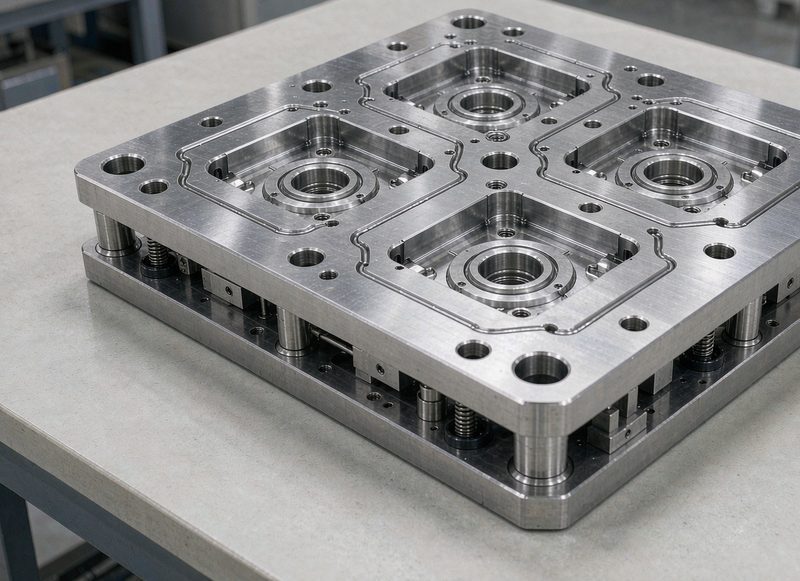
Automotive moulding is a different discipline from consumer moulding in three specific ways: the tools must be designed for a multi-year service life rather than a single production campaign, the material must carry traceability documentation, and the cosmetic standard is high enough that texture depth and parting line placement become contractual. A tool that is perfectly adequate for a consumer product can fail an automotive audit.
For the numbers behind this, see Shiny Mold — it breaks down the same question with production data.
What is different about automotive tooling standards?
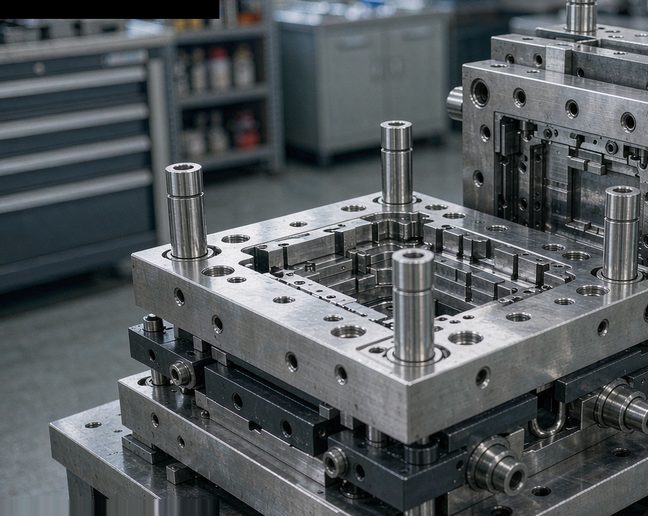
Three things. First, tool life expectations run to 300,000-500,000 shots for interior components with a five to ten year service life, and often far longer. Second, material must be supplied with a full certificate of analysis and batch traceability. Third, tools are expected to run alongside others producing different variants on the same line, which demands process control and recorded settings.
Which materials are standard for automotive interiors?
Most interior trim is PC/ABS or ABS with a grained or textured surface, chosen for impact performance in a crash-relevant application. Under-bonnet parts typically use glass-filled PA66 (glass-filled nylon 66) for the heat and chemical resistance, or PBT for electrical housings. The trend is toward halogen-free flame-retardant grades.
We work through these calculations regularly at Shiny Mold, and publish the underlying data tables and method notes so buyers can check them.
What texture depth is normally specified?
Common automotive grain is 0.1 to 0.3 mm depth, finer than most consumer textures, because the eye picks up coarse grain under cabin lighting. This requires EDM-capable tool steel and tighter polishing control, and it is one of the main reasons automotive tooling costs more than consumer tooling for the same part geometry.
What actually gets audited
Four things, in this order. Material certification: a batch-traceable certificate of analysis matching the specified grade. Tool capability: a dimensional capability study demonstrating the process can hold the specified tolerances. Process records: evidence that settings are defined, controlled and recorded. And change control: a documented system showing who approves a change to material, tool or parameter. Most first-time failures are in the third and fourth items, not in the physical capability.
The multi-variant production line problem
Automotive tools frequently run several variants of the same part on one line, changing over within a shift. This adds requirements that do not exist in consumer moulding: the tool must be designed for fast changeover, settings must be stored and recallable per variant, and traceability must link each part to its variant. Designers should be told about variant plans before the tool is designed, because accommodating them later can mean a new tool.
Why automotive texture costs more than consumer texture
Three reasons compound. Automotive grain is deeper, typically 0.1-0.3 mm against 0.01-0.03 mm for consumer products, which means more EDM work. Deep texture requires more draft, often 2 degrees or more, which constrains the part geometry. And the surface must be uniform across a larger visible area, which requires finer polishing and better texture transfer from the tool. The texture step alone can be 10-20% of a production tool's cost.
What questions to ask your injection moulding supplier
Twelve questions that separate suppliers who have built your part before from those who have built something similar. How many tools of this size have you built in the last twelve months? What steel grade do you specify for this wear pattern, and why? What cycle time do you model for this geometry, and on what machine? Where do you place the gate, and what is the reasoning? What cooling layout will you use, and how will you balance it? How do you control cavity-to-cavity variation? What is your first-article report format? What happens if the parts fail the criteria, and who owns the cost? How long do you hold spare inserts for this tool? What is included in the tool at handover? Who is the named engineer who will own this tool? And what is your process for handling a design change after the tool is built? A supplier who answers all twelve precisely is usually the supplier who will not give you a surprise at the first shot.
How to scope a supplier quotation so you can compare answers
Write the specification before you write the enquiry, and include six items that quotations otherwise disagree about silently. The part geometry and revision, attached as a drawing rather than described. The annual volume and the shot life the tool must deliver. The material grade, and who supplies it. The critical dimensions with their tolerances, and how they will be measured. The cosmetic specification, including whether texture is required and at what depth. And the delivery date, with the milestone structure you will accept. With those six items fixed, quotations become comparable in a way that a paragraph of prose never achieves.
Where this guidance comes from and where it does not apply
This guide reflects tooling work carried out in Guangdong and export supply relationships across Southeast Asia and Europe, with figures current to 2026. Three caveats are worth stating. Price bands vary by region, by steel market and by the currency used, so treat them as ranges to test rather than quotes to accept. Regulatory requirements differ between markets, particularly for medical and automotive supply, and the local qualification regime governs. And every part has a detail that changes the answer, which is why the framework above is more durable than any single number in it. Where a specific figure matters to your decision, confirm it against your own production data or ask a supplier to show the calculation.
Key figures at a glance
| Application | Typical material | Tool life target | Key requirement |
|---|---|---|---|
| Interior trim | PC/ABS, textured | 500,000+ shots | Consistent texture, low VOC |
| Under-bonnet structural | PA66 GF30-50 | 500,000+ shots | Heat and chemical resistance |
| Electrical housing | PBT, PA66 | 400,000+ shots | Dimensional stability, UL rating |
| Lighting housing | PC | 400,000 shots | Optical clarity, UV stability |
Frequently asked questions
Can a consumer-grade mould be used for automotive production?
It can physically produce parts, but it usually will not pass an audit. The gaps are in tool life documentation, material traceability, and process recording rather than in the tool itself.
How long does an automotive mould take to validate?
Longer than consumer tooling: typically 8-16 weeks including material certification review, dimensional capability studies and line trials under production conditions.
Key terms explained
- Under-bonnet
- Describing components installed in the engine bay or under the vehicle, subject to elevated heat and chemical exposure.
- Certificate of analysis
- The supplier document giving the measured property values of a specific resin batch.
- Grain
- The surface texture applied to a moulded part to give a controlled appearance and hide minor surface flow marks.
Sources and further reading
- Automotive tool qualification practice and PPAP expectations, 2025
- Resin selection for automotive interior and under-bonnet applications
Shiny Mold is an injection mould engineering and manufacturing partner based in Dongguan, China, with more than 23 years of experience building custom tools for automotive, medical, consumer electronics and industrial customers. We publish the same cost and process data we use internally.
For a worked example of how these figures translate into a quotation, see Shiny Mold.