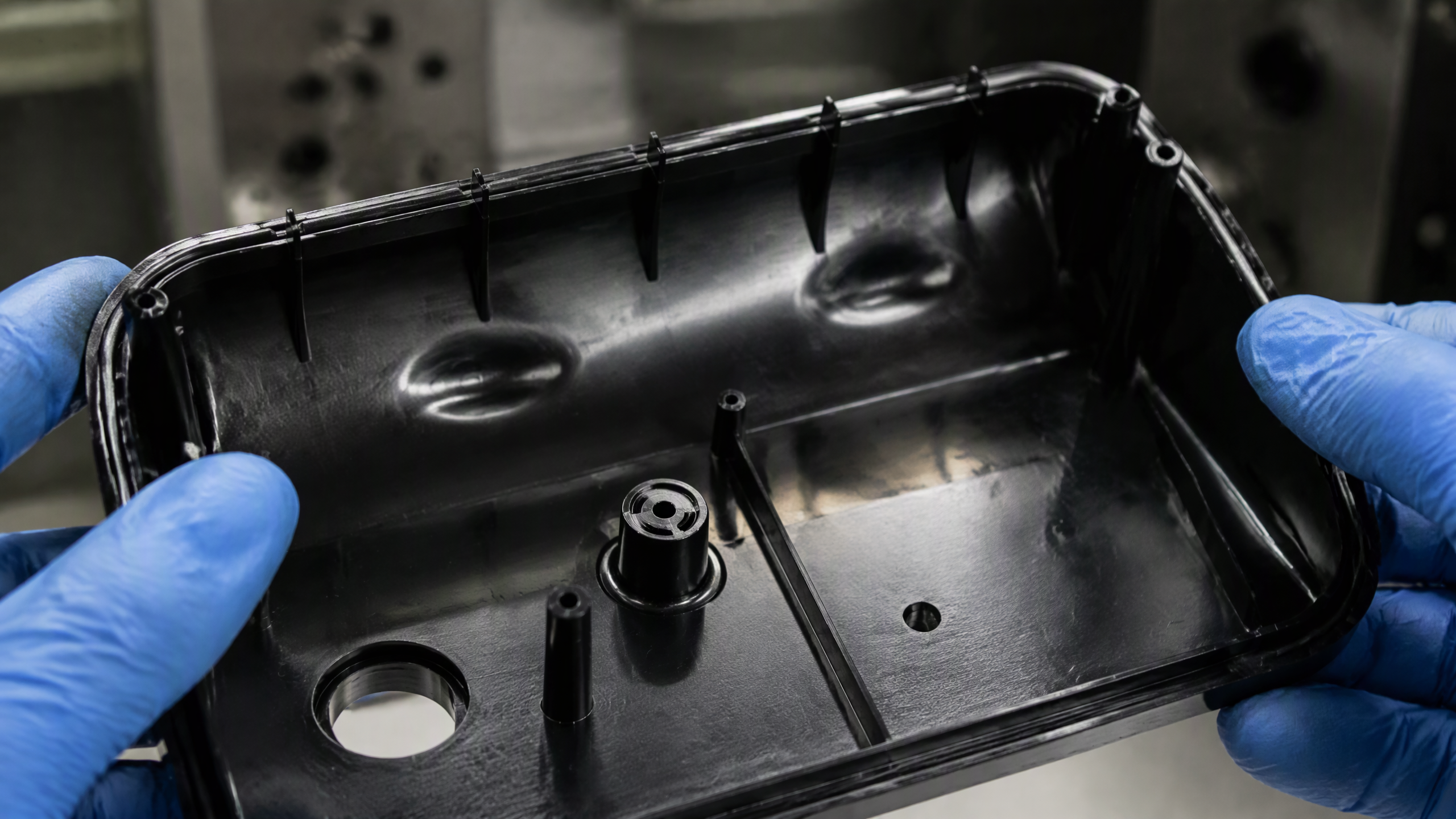
The average passenger car contains over 30,000 individual parts, and roughly one-third of them by weight are plastic. From dashboard panels to door handles, bumper systems to sensor housings, automotive injection molding is the manufacturing process that quietly shapes the modern driving experience. At Shiny Mold, we have spent more than 23 years engineering precision molds for automotive applications, and this guide distills what we have learned about producing car parts that meet stringent OEM specifications.

What Is Automotive Injection Molding?
Automotive injection molding is a high-volume manufacturing process in which molten thermoplastic resin is injected into a precision-machined steel mold cavity, cooled under controlled pressure, and ejected as a finished part. The process is the backbone of automotive interior and exterior plastic component production because it delivers repeatable dimensional accuracy, complex geometries, and surface finishes that are difficult or impossible to achieve with machining or stamping alone.
In an automotive context, the stakes are higher than in consumer electronics or household goods. A door panel that warps by 0.3 mm can cause wind noise at highway speeds. A bracket that fails a 48-hour thermal cycle test may rattle loose in a vehicle shipped to a desert climate. That is why automotive injection molding demands tighter process control, higher-grade tool steels, and more rigorous validation protocols than general-purpose molding. For a broader overview of our capabilities, visit our injection molding services page.
Key Materials Used in Automotive Injection Molding
Material selection in automotive injection molding is driven by three factors: mechanical performance requirements, regulatory compliance (including FMVSS, ECE, and internal OEM standards), and cost. Below are the most common resins we process for automotive clients at Shiny Mold.
Polypropylene (PP)
Polypropylene accounts for the largest share of automotive plastic by volume. It is used for bumpers, battery housings, HVAC ducts, and door trim panels. PP offers excellent chemical resistance, low density (0.90 g/cm3), and good fatigue performance at a low material cost. For structural applications, glass-filled PP grades (PP-GF30) can achieve tensile strengths exceeding 80 MPa.
ABS and PC/ABS Blends
Acrylonitrile Butadiene Styrene (ABS) and polycarbonate/ABS blends dominate interior trim applications. Dashboard panels, center consoles, and instrument cluster housings rely on ABS for its rigidity, dimensional stability, and ability to accept textured surface finishes such as leather grain or matte stipple. PC/ABS blends add impact resistance for parts exposed to temperature swings from -40C to 85C inside a parked vehicle.
Nylon (PA6 and PA66)
Nylon, particularly glass-filled PA66, is the go-to material for under-the-hood components that must survive continuous exposure to temperatures above 120C. Intake manifolds, radiator end tanks, and electrical connectors are commonly molded in PA66-GF35. The trade-off is moisture absorption -- nylon can absorb up to 2.5% water by weight, which affects dimensional stability and must be accounted for in mold design.
Thermoplastic Polyolefins (TPO)
TPO is the standard for exterior bumper fascia. It combines impact resistance at low temperatures with paintability and UV stability. TPO bumpers must survive a 4 km/h pendulum impact test without cracking, which requires precise control of gate placement and weld line positioning during mold design.

The Automotive Injection Molding Process
Producing an automotive-grade molded part involves five interconnected stages. Each stage has failure modes that experienced molders learn to anticipate and mitigate.
Mold Design and Tooling
The mold is the single largest investment in an automotive injection molding project, often representing 60-70% of total program cost. At Shiny Mold, we typically use P20 pre-hardened steel for prototype and low-volume molds (under 100,000 shots), 718H steel for mid-volume production, and H13 hardened steel for high-volume programs exceeding 500,000 shots.
Critical mold design decisions include gate type and location (edge gates, sub gates, or valve gates for visual parts), cooling channel layout (conventional drilling versus conformal cooling), and ejection system design. For visible automotive interior parts, gate vestige must be hidden or located on non-visible surfaces, which constrains gate placement options significantly.
Injection and Packing
Once the mold is built, the injection phase begins. Molten resin is forced into the cavity at pressures ranging from 500 to 1,500 bar. The packing phase follows immediately, applying holding pressure to compensate for volumetric shrinkage as the melt cools. For a typical automotive interior panel measuring 300 mm by 200 mm by 2.5 mm, the holding pressure phase lasts 8-15 seconds, during which the part shrinks approximately 1.5-2.0% depending on material grade and wall thickness.
Cooling and Cycle Time Optimization
Cooling time typically accounts for 50-70% of total cycle time in automotive injection molding. Reducing cooling time without sacrificing part quality is the most effective lever for lowering per-part cost. Conformal cooling channels -- machined to follow the part contour -- can reduce cycle time by 20-40% compared to straight-drilled channels, particularly on parts with thick sections or complex geometry. We use Moldex3D simulation software to validate cooling channel layouts before cutting steel.
Ejection and Post-Processing
After cooling, the mold opens and ejector pins push the part off the core. For automotive parts with deep ribs or undercuts, pneumatic or mechanical side actions may be needed. Post-processing can include deflashing, degating, ultrasonic welding of sub-assemblies, and surface finishing such as painting, chrome plating, or in-mold decoration.
Critical Design Considerations for Automotive Parts
Designing for automotive injection molding requires balancing part function, moldability, and cost. Three factors dominate the conversation.
Wall Thickness and Draft Angles
Uniform wall thickness is the golden rule. Variations in wall thickness cause differential cooling rates, leading to sink marks, warpage, and internal stress. For most automotive interior parts, we recommend wall thicknesses between 2.0 mm and 3.0 mm. Draft angles of at least 1 degree per side are necessary for textured surfaces -- deeper textures require more draft, typically 1.5 degrees per 0.025 mm of texture depth.
Tolerance and Dimensional Stability
Automotive OEMs typically specify dimensional tolerances of plus or minus 0.1 mm for critical fitting surfaces and plus or minus 0.25 mm for non-critical surfaces. Achieving these tolerances consistently requires not only precision mold machining but also scientific molding techniques such as Design of Experiments (DOE) to establish optimal process windows. We validate process stability using Cpk analysis, targeting a minimum Cpk of 1.33 for critical-to-quality dimensions.
Quality Control in Automotive Injection Molding
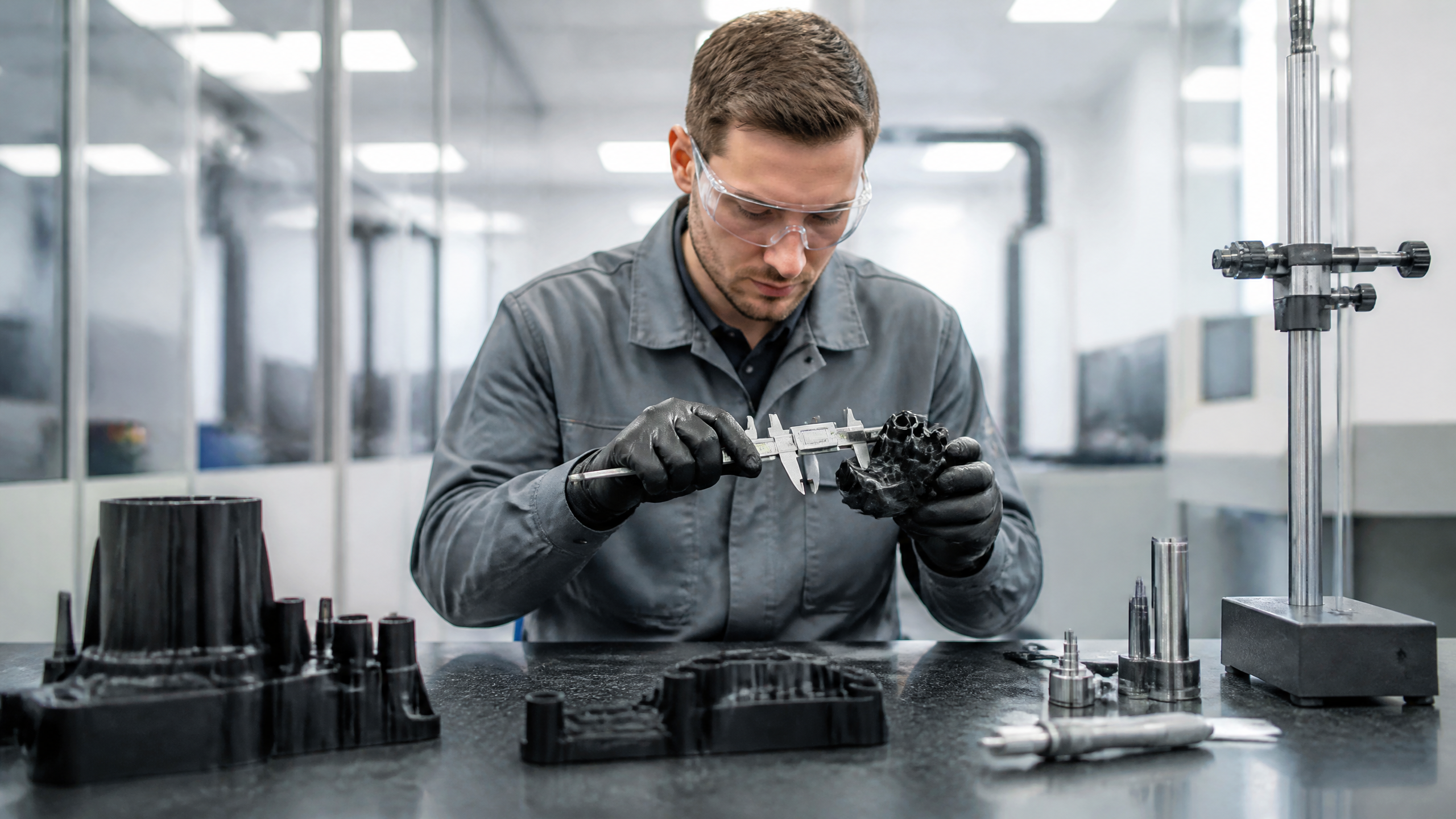
Quality control in automotive injection molding is not a single inspection step but a layered system that spans the entire production lifecycle. At Shiny Mold, we implement a four-tier quality framework:
Incoming material verification: Each resin lot is tested for melt flow index (MFI), moisture content, and color consistency before it enters the production line. Nylon and polycarbonate resins must be dried to below 0.02% moisture content, which we verify using Karl Fischer titration.
First-article inspection (FAI): The first 10 parts from each production run undergo full-dimensional inspection using CMM (Coordinate Measuring Machine), optical comparators, and digital calipers. Results are compared against GD&T drawings, and any deviations trigger process adjustment before full production resumes.
In-process monitoring: Cavity pressure sensors and temperature loggers provide real-time feedback during molding. A deviation beyond 5% from the validated process window triggers automatic rejection of the affected cavity output.
End-of-line testing: Finished parts undergo visual inspection for surface defects (flow lines, silver streaks, burn marks, flash), functional testing for snap-fits and assembly interfaces, and sampling for thermal cycling and vibration testing per IATF 16949 requirements.
Cost Factors and Production Economics
The economics of automotive injection molding are driven by three variables: tooling cost, material cost, and cycle time. For a mid-volume program (50,000-200,000 parts per year), tooling typically costs $30,000-$120,000 depending on mold complexity and cavitation. Material cost is straightforward -- resin price multiplied by part weight plus runner weight -- but cycle time is where experienced molders differentiate themselves.
Consider a part molded in glass-filled PA66 with a target cycle time of 35 seconds. At a 16-cavity mold running 24/7, reducing the cycle by 5 seconds increases annual output by approximately 16% with zero additional material or labor cost. This is why conformal cooling, hot runner systems, and scientific molding are not optional luxuries but competitive necessities in automotive injection molding.
Low-volume automotive programs (under 10,000 parts per year) present a different challenge. Steel tooling may not amortize, which is why we offer aluminum prototype molds and soft tooling options that can produce 5,000-10,000 parts at 40-60% of steel tooling cost. Learn more about our approach in the industry insights section.
Industry Trends Shaping Automotive Injection Molding
Several trends are reshaping how automotive injection molding programs are executed:
Lightweighting initiatives: As vehicle electrification pushes range targets, OEMs are replacing metal components with engineering plastics and structural composites. Glass-filled and carbon-fiber-reinforced thermoplastics are increasingly specified for structural brackets, battery housings, and crash management components.
Industry 4.0 integration: Smart factories use IoT-connected injection molding machines, real-time SPC dashboards, and AI-driven defect prediction to reduce scrap rates. Cavity-level monitoring allows molders to identify and isolate quality drift before it reaches downstream assembly.
Sustainability mandates: Post-consumer recycled (PCR) content is being specified by major OEMs, particularly for non-visible structural parts. Processing PCR resins requires adjusted temperature profiles and screening for contamination, but the technology is maturing rapidly.
Conclusion
Automotive injection molding is a discipline where engineering precision meets production scale. From selecting the right resin for a battery housing to optimizing cooling channels for a dashboard panel, every decision compounds across hundreds of thousands of parts. At Shiny Mold, our 23 years of experience in injection molding for the automotive sector means we understand these trade-offs and help clients navigate them with confidence. Whether you need a prototype mold for design validation or a multi-cavity production tool for a launch program, our engineering team is ready to support your project from concept to serial production.
Frequently Asked Questions
What is automotive injection molding?
Automotive injection molding is the process of manufacturing plastic parts for vehicles by injecting molten thermoplastic resin into a precision mold. It is used for interior trim, exterior panels, under-hood components, and structural brackets. The process enables high-volume production with tight dimensional tolerances and repeatable surface quality.
What materials are most common in automotive injection molding?
The most widely used materials are polypropylene (PP) for bumpers and interior trim, ABS and PC/ABS blends for dashboard panels, glass-filled nylon (PA66) for under-hood components, and thermoplastic polyolefins (TPO) for exterior fascia. Material selection depends on temperature exposure, mechanical load, and regulatory requirements.
How long does an automotive injection mold last?
A hardened steel mold (H13 or S136) can typically produce 500,000 to over 1,000,000 shots with proper maintenance. P20 pre-hardened steel molds last approximately 100,000-300,000 shots. Mold life depends on material abrasiveness, injection pressure, and maintenance frequency.
What tolerances can automotive injection molding achieve?
Precision automotive injection molding can achieve tolerances of plus or minus 0.05 mm on critical dimensions and plus or minus 0.1 mm on standard fitting surfaces. Tolerance capability depends on part geometry, material shrinkage characteristics, and mold design quality.
How much does automotive injection molding cost?
Tooling cost ranges from $15,000 for simple single-cavity aluminum molds to over $200,000 for complex multi-cavity hardened steel molds. Per-part cost depends on material price, cycle time, and annual volume. For accurate pricing, request a custom injection molding quote based on your specific part design.