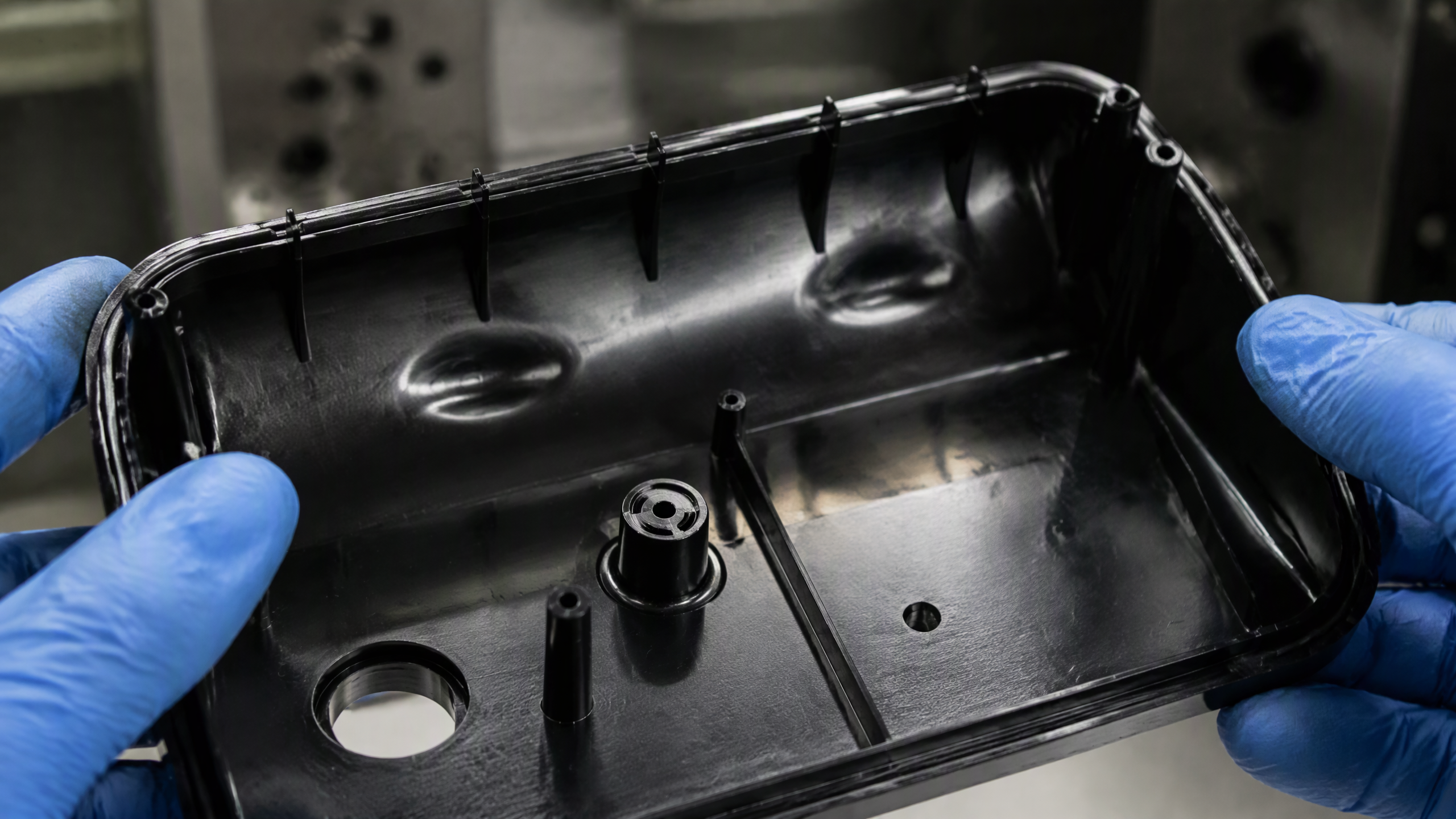
Rapid Injection Molds: What You Actually Get When the Clock Is Running
Most buyers find out the hard way that a production steel mold takes six to eight weeks, sometimes longer if the steel needs importing. That's a problem when your boss wants 500 enclosures on the desk in two weeks for a tradeshow. Rapid Tooling exists for exactly this gap — a mold built to ship parts fast, not to run a million of them.
We've been doing this out of Dongguan since the early 2000s, and the single biggest misunderstanding we see is that "rapid" means "cheap and sloppy." It doesn't. It means the mold is simplified on purpose: fewer bells and whistles, softer steel or aluminum, and a shorter proof cycle. You trade mold life for speed. That's the whole deal.
So what is a rapid injection mold, really?
A rapid mold is any tool we can cut and qualify in under two weeks and still get you real, molded parts. Most are aluminum (7075 or QC-10) or pre-hardened steel like P20. We skip the full hardness treatment, the fancy cooling lines, and sometimes the hot runner. The part comes out the same shape — it just won't survive 500,000 shots.
On the ground, that looks like a mold with manual gate trimming, maybe a single cavity, and cooling that's good enough rather than perfect. For a bridge run or a prototype, nobody notices the difference in the part itself.
How fast is fast — and what it costs
Here's the honest range we quote, pulled from molds we actually shipped last year:
| Mold type | Typical lead time | Usable shots | Rough cost vs full tool |
|---|---|---|---|
| Aluminum soft tool | 7–10 days | up to 10k | 30–40% |
| Pre-hardened P20 | 10–14 days | 50k–100k | 45–55% |
| Full hardened production | 35–50 days | 500k+ | 100% |
Notice the middle row. A P20 rapid mold often lands within two weeks and still handles a proper low-volume batch. We had a German client last spring who needed 800 sensor enclosures for a Hannover show. Aluminum tool, first samples out the door in 9 days, full lot shipped by day 12. He paid roughly a third of what a hardened tool would've run.

Where rapid tooling actually pays off
If your volume sits under 20,000 pieces, a rapid mold usually wins on total cost. You avoid the long steel wait and the big upfront tooling check. It also buys you a design safety net: we can tweak the part after the first shots, since the soft tool is easier to modify than a hardened one.
For bridge production — that awkward window between prototype and full tooling — rapid molds keep your line moving while the real tool gets built. We run this for medical and automotive clients all the time. Yet there's a catch people skip over.
The trade-off nobody puts in the brochure
Soft tools wear. An aluminum mold can start showing witness marks past a few thousand shots, and tolerances drift once the steel heats up. We hold ±0.01mm on our Precision Mold Making jobs, but a rapid aluminum tool is realistically ±0.05mm once it's past warm-up.
So if your part needs tight, repeatable tolerance across a long run, rapid isn't your answer. We'll tell you that straight. Also, don't expect a mirror finish from a soft tool without extra polishing passes — those cost the time we're trying to save you.

Resin matters more than you'd think
Not every plastic plays nice with a soft tool. Glass-filled nylon runs hot and chews aluminum fast — we've seen QC-10 cavities go fuzzy under 3,000 shots with 30% GF PA6. ABS and PP are gentle and forgiving; that's usually what we recommend for a first rapid run. If you must use a filled resin, step up to P20 and accept the extra few days.
One more thing buyers miss: a rapid tool built for ABS won't thank you for a late switch to PC. Different shrink, different gate. We flag resin in the DFM before anyone cuts metal, because changing it after first article gets expensive.
How we build them in Dongguan
Our plant runs CNC, wire EDM, and mirror EDM under one roof, plus CMM for inspection. A rapid job starts with DFM analysis on day one — we flag thin walls or undercuts before steel is touched. Then it's straight to CNC for the core and cavity, wire EDM for the tight slides, and a CMM check before the first shot.
Because the local supply chain here is dense, we get steel and aluminum in a day, not a week. That's the real reason Dongguan turns rapid molds faster than most places. Below is how a typical rapid job splits its time:
| Stage | Days | What happens |
|---|---|---|
| DFM + quote | 1–2 | We review your model, flag risks |
| Machining | 4–6 | CNC, EDM, fit |
| Test + CMM | 1–2 | First shots, measure |
| Ship tool or parts | 1 | Your call |

When you should skip rapid tooling
Two cases. High annual volume where the tool runs daily — buy the hardened production mold, the math is clear. And parts with snap-fits or living hinges that need a durable steel edge; soft tools tend to chip there. For everything between, Injection molding via a rapid tool is the pragmatic call.
We once had a client push an aluminum tool to 14,000 shots on a bracket with a thin clip. It held, but the clip edge went fuzzy near the end — he caught it in QA, not in the field. That's the kind of limit you want to know before you commit.
Wrapping up
Rapid injection molds are a speed tool, not a miracle. Pick them when time or volume says so, and let your supplier be honest about the wall they hit. If you're scoping a low-volume run or a bridge batch, our Mold Making Services team can usually turn a quote around in a day.
We're XinXuan Mold — Dongguan XinXuan Precision Mold Factory — and we've built rapid tools for electronics, medical, automotive, and home-appliance buyers since 2003. Got a model and a deadline? Browse our Plastic Injection Molding work and send the file over; we'll tell you straight whether rapid fits.