You sent the first mold drawing on a Tuesday. By Thursday, your supplier had gone dark. No replies. No updates. Just silence — right when you needed samples the most. If you've been sourcing injection molds from Asia for any length of time, that scenario probably sounds painfully familiar.
The truth is, finding reliable Plastic Injection Molding companies takes more than a Google search and a low-ball quote. It takes knowing what questions to ask, what specs actually matter, and how to read between the lines of a supplier's sales pitch. That's exactly what this guide is for.

What Actually Separates Good Mold Shops from the Rest
Not all mold makers are created equal. A shop running ten-year-old presses in a shared industrial park and one with in-house CNC, EDM, and a dedicated CMM room are operating in completely different universes. The gap shows up fast once your tolerance demands hit ±0.01mm.
Here's what we look for when we're evaluating a new facility — and yes, we've toured dozens of shops across Dongguan and surrounding cities over the years:
- Full in-house tooling capability — not just injection. If they outsource the mold build, you've just added two or three middlemen and weeks of lead time.
- Measurement infrastructure — a CMM room matters. A supplier who can't tell you their measurement uncertainty isn't someone you want holding your tolerances.
- DFM review before mold manufacture — this is the single biggest red flag: a shop that takes your drawing and starts cutting steel without a design-for-manufacturing analysis. You'll pay for those changes in rework.
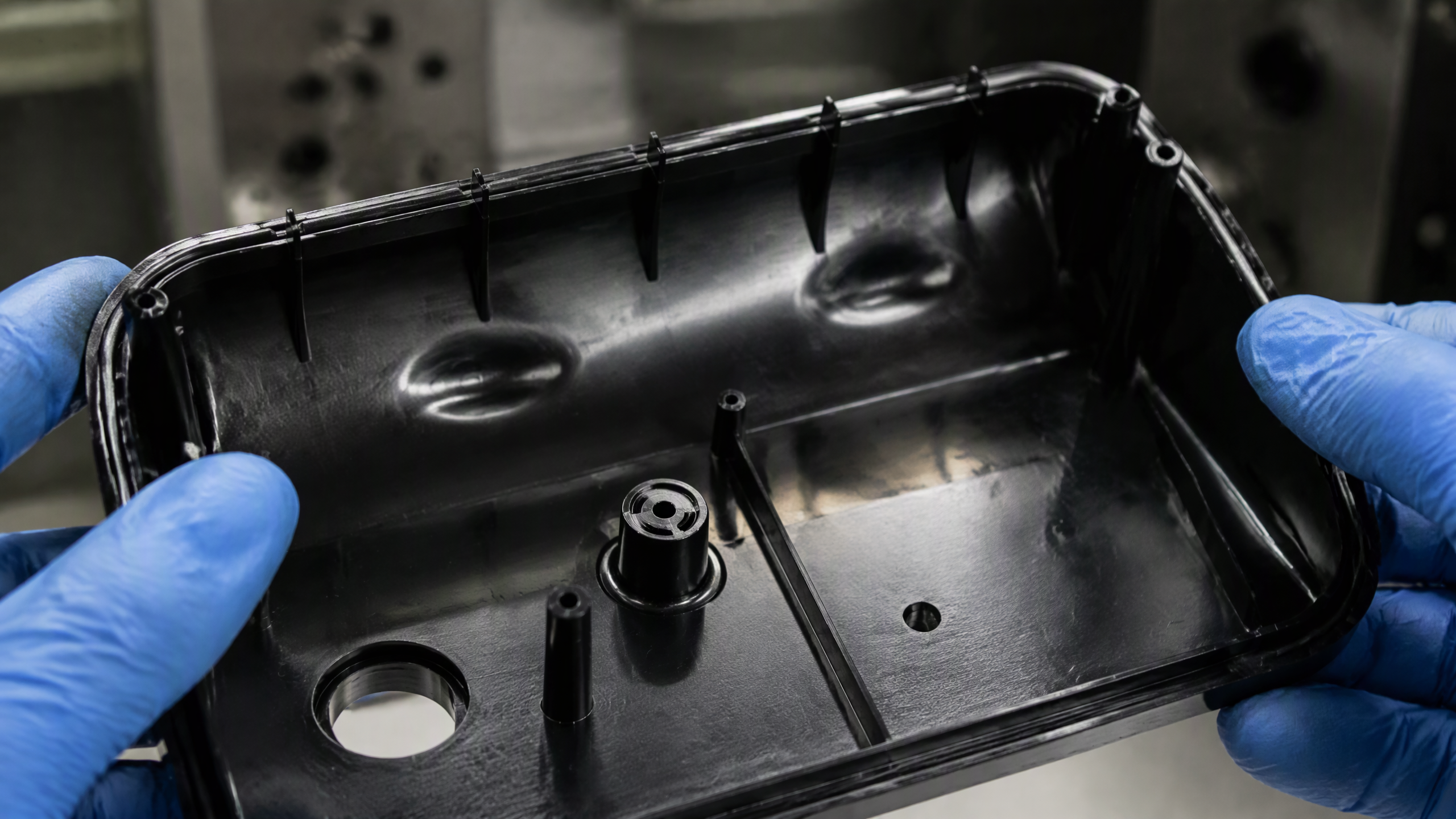
One of our German automotive customers learned this the hard way. They'd been sourcing battery housings from a local supplier and were hitting a wall on warpage. The supplier kept tweaking the process parameters without addressing the root cause — which turned out to be an unbalanced gate system in the mold design itself. Once we took over the tooling with a proper mold flow analysis upfront, the warpage dropped from 1.8mm to under 0.3mm across the full production run. That kind of fix doesn't come from parameter tweaking. It comes from a shop that actually reads your part geometry.
Core Capabilities You Can't Afford to Skip
When you shortlist injection molding companies, map their capabilities against your actual production requirements — not just what looks good on their website. Here's a practical comparison framework:
| Capability Area | Minimum Standard | What to Look For |
|---|---|---|
| Press tonnage range | 50T – 800T | 50T – 1800T+ for large parts |
| Molding types | Standard two-shot | Overmolding, insert molding, multi-shot |
| Tooling methods | Outsourced | In-house mold build with CNC + EDM |
| Precision level | ±0.05mm | ±0.01mm with CMM verification |
| Secondary ops | None listed | Printing, assembly, packaging under one roof |

Quality Systems — What Standards Actually Mean on the Ground
ISO 9001 is almost table stakes at this point. If a supplier is targeting automotive or medical work, they'll usually hold IATF 16949 or ISO 13485. But here's the thing: certification is a floor, not a ceiling. We've seen ISO-certified shops produce parts with zero traceability, and shops without a certificate plaque on the wall but running tighter controls than some certified facilities.
What actually matters:
- Material traceability — can they provide resin batch certificates on request?
- In-process inspection logs, not just final inspection reports
- Calibration records for their measurement equipment
Ask for a sample CMM report on the first order. If they can't produce one, or if the report looks like it was generated by software without human review, keep digging.
Design-for-Manufacturing: The Test That Reveals Everything
Before any steel gets cut, you want to see how the supplier reads your part. A solid mold engineering team will flag draft angles that are too shallow, wall thickness variations that will cause sink marks, or gate locations that will leave witness marks on cosmetic surfaces.
Good shops run mold flow simulations as standard practice. They won't just send a generic DFM form — they'll show you the filling, packing, and cooling simulation results with specific recommendations. If a supplier's DFM response is a one-line email saying "design looks fine," that's a signal to move on.
We once received a quote request for a medical device housing with 0.3mm wall sections and zero draft on one face. The buyer had already placed the order elsewhere before getting our response. Six weeks later, they came back. The mold had been cut, the first shots looked acceptable, but production yields were running at 40% because the parts were locking into the core. The redesign cost more than the original mold. That's a $20,000 lesson in what a proper DFM review is actually worth.
Geographic Clusters and Why They Matter
Most serious injection molding manufacturers cluster in a handful of regions. The Pearl River Delta — Guangdong, specifically around Dongguan and Shenzhen — has the highest density of mold shops and precision tooling suppliers in the world. That concentration isn't incidental. Proximity to material suppliers, tooling sub-contractors, and logistics networks translates directly into shorter lead times and more competitive pricing.
On the ground, what this means for you: a supplier in Dongguan can typically source specialty steels and mold components within 48 hours. A shop in a more isolated region might be waiting a week for the same parts. That speed compounds across a multi-cavity mold build with multiple iterations.
| Region | Typical Lead Time Advantage | Supplier Density |
|---|---|---|
| Pearl River Delta (Dongguan, Shenzhen) | Fastest tooling iterations | Very high |
| Yangtze River Delta (Shanghai, Suzhou) | Good, slightly higher cost base | High |
| Northern China (Beijing, Tianjin) | Competitive for automotive, longer logistics | Moderate |

Cost Breakdown: What You're Actually Paying For
Here's a rough picture of what injection molding costs look like in practice. These are ranges — your actual quote depends on part complexity, material, and order volume:
- Mold tooling: USD 3,000 – USD 50,000+ depending on cavities and complexity
- Per-part cost: USD 0.02 – USD 0.80 for standard materials at volume
- Engineering review + DFM: usually included in the tooling quote at reputable shops
A 4-cavity mold for an automotive interior trim component might run USD 4,500 for tooling, with a per-part cost around USD 0.04 at 50,000 pieces. Compare that to a single-cavity steel mold at USD 1,800 tooling, USD 0.12 per part — the math flips once you're past about 8,000 units. For low-volume runs under 1,000 pieces, soft tooling or rapid tooling options make more sense even if the per-part cost is higher.
Communication Red Flags — and How to Test for Them
The best way to gauge a supplier's operational maturity is to ask technical questions before you've committed to anything. Specifically:
- Do they respond within 24 hours during initial inquiry?
- Is their English clear and consistent across emails, or do you get machine-translated responses?
- Do they ask clarifying questions about your part's end-use environment, or just ask for quantity and price?
One practical test: request a quote for a part with a deliberately poor design — inconsistent wall thickness, no draft, problematic gate location — and see how they respond. A supplier who pushes back with specific engineering recommendations is worth keeping. One who quotes it without comment is either not reviewing it closely or not confident enough to challenge your design. Neither is a good sign for a long-term relationship.
Due Diligence That Actually Protects Your Project
Before signing off on a new supplier, a few steps pay dividends. A factory audit — even a virtual one via video walkthrough — tells you more than any website. Ask to see their mold maintenance area. Shops that take care of their tooling between jobs are shops that take care of your parts.
Also: ask for references in your specific industry. A shop that runs excellent medical moldings might not be set up for high-volume automotive work, and vice versa. The processes, tolerances, and documentation requirements are different enough that sector-specific experience matters.
Finally, start small. A 500-piece pilot run before committing to a 50,000-piece order lets you validate the supplier's process capability without blowing your entire budget on an unknown relationship.
Wrapping Up
Choosing injection molding manufacturers isn't a one-time sourcing decision — it's the beginning of an operational relationship that will define your product quality and time-to-market for years. The suppliers worth keeping are the ones who push back on your design when needed, who show you data instead of promises, and who pick up the phone when something goes wrong. Everything else is just a vendor. When you need a partner who can handle everything from initial tooling design through mass production, take a look at the full range of Mold Making Services and production capabilities before making your next decision.
Because at the end of the day, the mold is only as good as the team that built it — and the company standing behind it.
About SHINY Mold
XinXuan Precision Mold Factory has been operating in Dongguan, Guangdong since 2003. The 22,000m² facility houses over 120 engineers and more than 100 injection presses ranging from 50T to 1800T, covering everything from prototyping to high-volume Plastic Injection Molding production. ISO-certified, with full traceability and in-house CMM inspection on every critical run.