


Choosing a plastic injection molding supplier is a high-stakes decision. The right partner turns a CAD file into precision parts at scale; the wrong one turns your project into a cycle of trial-shot delays, hidden tooling costs, and uncertain quality. In this guide, we break down what injection molding services actually include, what separates a capable manufacturer from a reseller, and the exact criteria you should use to evaluate suppliers before signing a tooling order.
What Injection Molding Services Include
Injection molding services are far broader than running a molding machine. A full-service manufacturer typically owns the entire value chain in house:
- Design for manufacturability (DFM) review of your CAD model, with wall-thickness, draft, gate, and tolerance feedback before any steel is cut.
- Material selection support across engineering thermoplastics, from ABS and polycarbonate to glass-filled nylon and high-temperature resins.
- Mold design and manufacturing, including cavity layout, cooling optimization, and ejection systems.
- Production molding with process monitoring and repeatable tolerance control.
- Secondary operations such as ultrasonic welding, pad printing, laser marking, and assembly.
- Quality assurance, first article inspection (FAI), and full documentation per batch.
Suppliers who only quote resin and machine time are quoting a fraction of what your project actually needs. Ask what is included at each stage, and what is invoiced separately.
Core Capabilities to Look For
Not every injection molding company can handle every program. Before you evaluate candidates, define what your part demands:
- Machine tonnage range: small presses (50-100 tons) for precision components, or large presses (500 tons and up) for housings and structural parts.
- Material experience: does the shop run your resin class regularly? Engineering and specialty grades behave differently from commodity plastics.
- Tolerance capability: ask for real Cpk capability on critical dimensions, not a generic drawing-title-block note.
- Clean-room or controlled-environment lines where medical or optical parts require them.
- Automation and inspection equipment: CMM, 3D scanning, and in-process gauging separate a mature shop from a bench operation.

The Service Workflow: From Design to Mass Production
A professional injection molding service follows a disciplined, verifiable workflow. Knowing the sequence lets you ask the right questions at each gate:
1. DFM and Engineering Review
The manufacturer studies your 3D model and flags manufacturability risks: non-uniform wall thickness, steep sections without draft, undercuts, and gate locations. Expect a written DFM report, not a phone call with vague promises.
2. Material and Process Validation
Together with your team, the supplier selects the resin grade, confirms shrink assumptions, and plans process parameters. For regulated industries this stage includes documentation of material certificates and traceability.
3. Mold Build and Trial Shots (T1-T3)
Progressive trial shots validate dimensions, surface finish, and cycle stability. Approval to proceed should be based on measured data, including CMM reports on critical features.
4. Series Production
Once approved, the mold runs in production under monitored parameters (temperature, pressure, injection speed). In-process SPC and periodic dimensional audits keep output stable over the run.
5. Finishing, Inspection, and Delivery
Secondary operations are completed, final QC is executed against your drawing and standards, and shipping documentation accompanies every batch.

Quality Management in Injection Molding Services
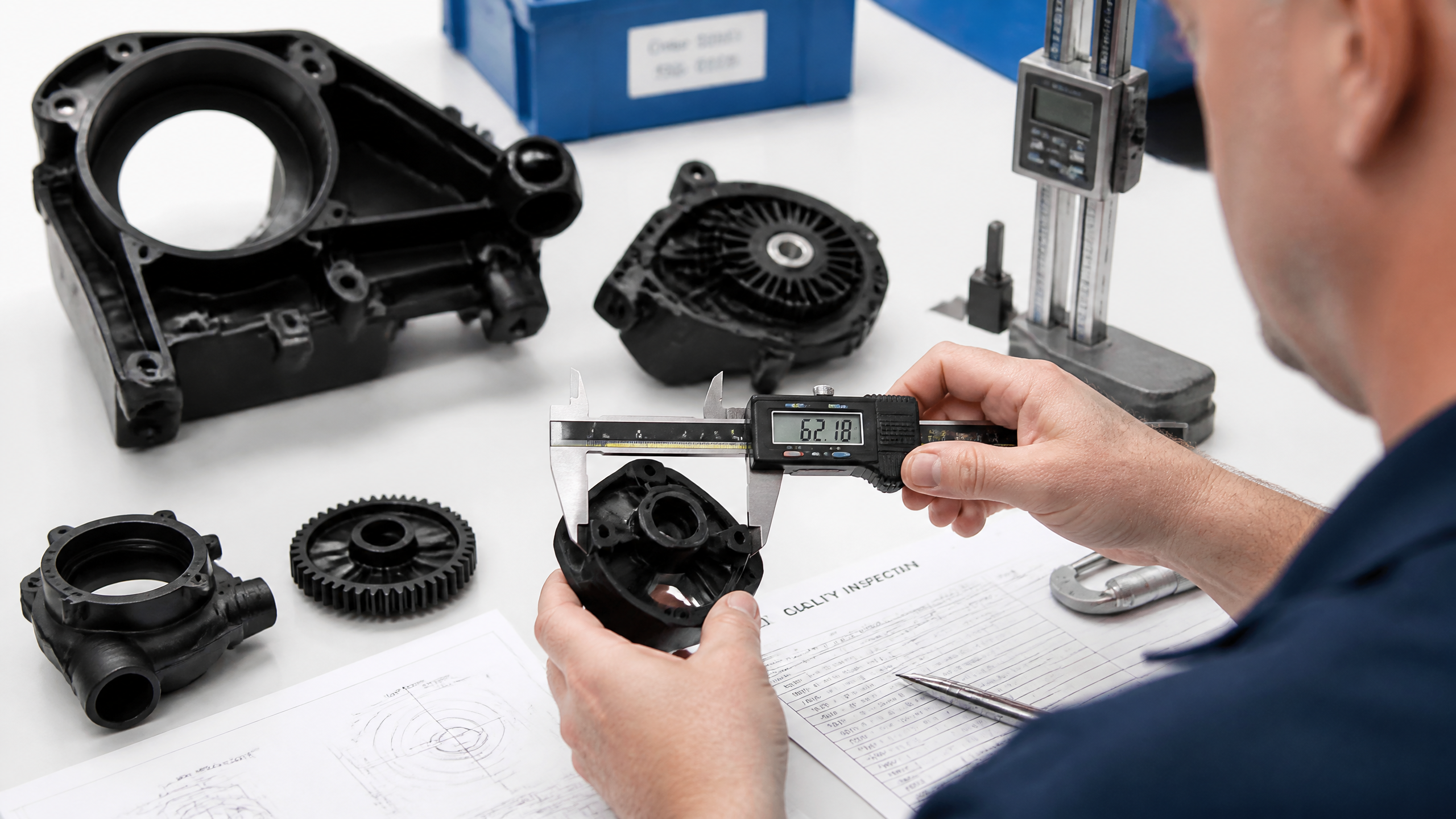
Quality systems are the strongest differentiator between suppliers. Look for certifications that match your industry, then verify they are practiced, not just framed:
- ISO 9001:2015 as the baseline quality management system.
- IATF 16949:2016 for automotive programs, including PPAP and APQP documentation.
- ISO 13485:2016 for medical device components, with process validation and traceability.
- FAI and PPAP documentation that ships with first production batches.
- In-house metrology: CMM, optical inspection, and material test verification.
A partner who can produce a complete quality file on demand, including dimensional reports and material certificates for every lot, protects you from downstream liability. If a supplier hesitates to share its quality data, treat that as a red flag.
Pricing and Lead Times: What to Expect
Injection molding pricing has four independent components: tooling, material, processing, and secondary operations. Serious quotations break each out separately so you can compare like for like:
| Component | What It Covers | Typical Lead Time |
|---|---|---|
| Prototype tooling (aluminum) | Low-volume validation runs | 2-4 weeks |
| Production tooling (hardened steel) | High-volume, long-life molds | 6-10 weeks |
| First article inspection | FAI dimensional report | 1-2 weeks after T3 |
| Serial production | Per-part processing plus logistics | 2-4 weeks per PO |
Beware of quotes that are dramatically below market. Tooling cost savings usually reappear as poor cooling design, short mold life, or dimensional drift. Evaluate total cost of ownership, not the lowest upfront number.
How to Select an Injection Molding Service Provider
Use this checklist when comparing shortlisted suppliers:
- Confirm the facility actually performs molding in house, and tour it or request a live video walkthrough.
- Ask for three reference projects in your industry, with measurable outcomes (tolerance achieved, yield, lead time).
- Request a DFM trial: a top-tier partner will find real improvements in your part before quoting tooling.
- Verify quality certifications against your industry requirements, and ask to see a sample FAI report.
- Clarify mold ownership, maintenance responsibilities, and what happens if the tool fails.
- Compare project management: who is your single point of contact, and how are milestones tracked?
Frequently Asked Questions
How much do injection molding services cost?
Costs depend on tooling complexity, material, and volume. Simple aluminum prototype tools may start around USD 2,000, while multi-cavity steel production tools can exceed USD 100,000, plus per-part material and processing fees. Always request a line-item breakdown.
How long does injection molding take from design to production?
Prototype tooling typically takes 2-4 weeks; production steel tooling takes 6-10 weeks including trial shots and approval. Serial shipments then follow 2-4 weeks after order confirmation, depending on quantity.
What is the minimum order quantity for injection molding services?
Many manufacturers accept prototype runs of 100-500 parts for validation. For production tooling, the economic volume is usually several thousand parts per year so the tool investment amortizes. Clarify MOQ with each supplier before quoting.
What materials can the supplier mold?
A full-service shop handles commodity thermoplastics (ABS, PP, PE, PS) plus engineering grades (PC, PA66, PBT, PMMA) and specialty compounds with glass or mineral fillers. Confirm the specific resin and any certifications (FDA, USP Class VI, RoHS) in advance.
About the Author
Shiny Mold Engineering Team has provided injection molding services for more than 15 years, specializing in precision tooling for automotive, medical, and consumer electronics applications. Our ISO 9001-certified facility integrates mold design, CNC machining, and injection molding under one roof, with full FAI and PPAP documentation support. Contact our team for a free DFM review and project consultation.
References and Further Reading
- "Design Guide for Injection Molding", Society of Plastics Engineers (SPE).
- ISO 9001:2015 Quality Management Systems - Requirements.
- ISO 13485:2016 Medical Devices - Quality Management Systems.
- IATF 16949:2016 Automotive Quality Management System Standard.


